
Farges' catalpa
Catalpa fargesii
Description
Growing requirements
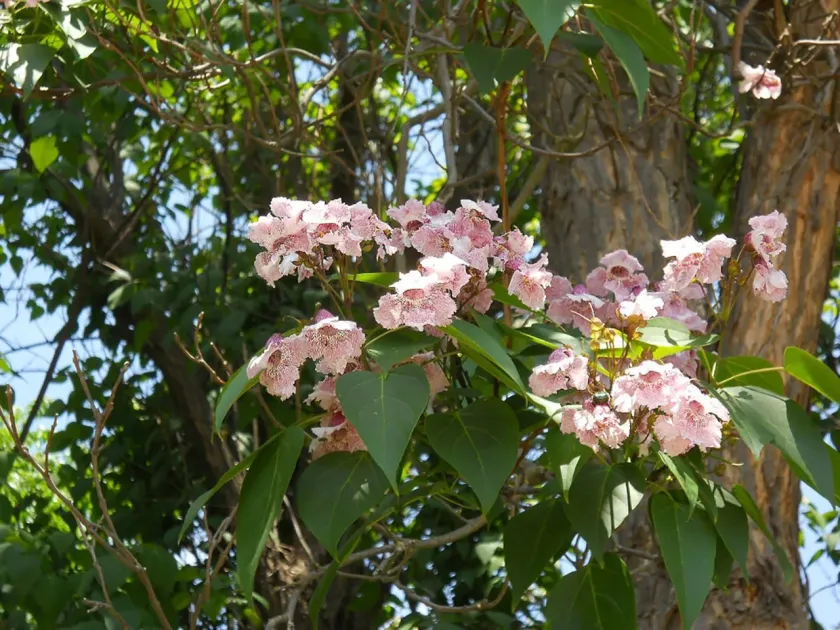
Farges' catalpa (Catalpa fargesii) is a remarkable deciduous tree belonging to the Bignoniaceae family. In its native habitat, it can reach heights of up to 20 meters, featuring a spreading canopy and large, heart-shaped leaves that turn a soft yellow hue in the autumn.
Native to the central and western provinces of China, this species thrives in warm, sheltered locations with plenty of direct sunlight. While young trees can tolerate partial shade, full sun exposure is generally preferred for optimal growth and flowering.
The cultivation of this tree requires fertile, deep, and moderately moist soil. The ideal soil pH is neutral to slightly acidic, and ensuring proper drainage is essential to prevent root rot, which is a common issue in poorly aerated or waterlogged sites.
The tree shows moderate winter hardiness. In regions experiencing harsh winters, young saplings require protection, including mulching the root zone and wrapping the trunk with burlap to prevent frost damage during the early stages of development.
Standard agrotechnical practices include regular watering during dry spells, applying balanced mineral fertilizers in the spring, and performing sanitary pruning. Structural pruning should be carried out in early spring, before the onset of active sap flow, to maintain a balanced shape.
Main diseases and pests
The primary health threats for Farges' catalpa include fungal diseases such as Verticillium wilt, which targets the tree's vascular system. Preventive measures focus on using sterilized pruning tools and avoiding excessive moisture around the base.
Common pests include scale insects and the catalpa moth. Periodic inspection of the foliage and bark is recommended to detect infestations early, allowing for the timely application of insecticides to preserve the tree's overall health and aesthetic appeal.