
Rhodohypoxis milloides
Rhodohypoxis milloides (Baker) Hilliard & B. L. Burtt
Description
Growing requirements
Rhodohypoxis milloides is a miniature tuberous perennial plant belonging to the Hypoxidaceae family. It is native to the high-altitude mountain regions of Southern Africa, particularly the Drakensberg range, where it thrives in rocky, well-drained slopes characterized by distinct wet and dry seasons.
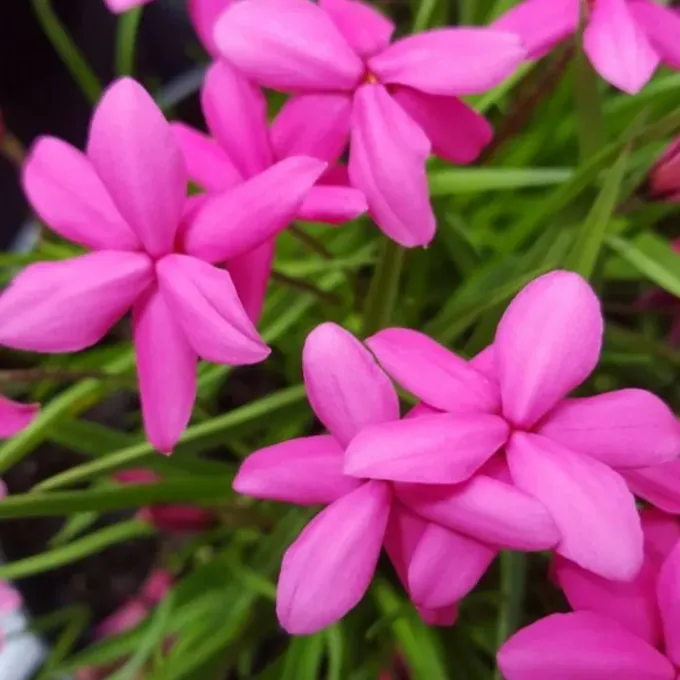
The plant features narrow, hairy, lanceolate leaves arranged in a basal rosette. During the summer growing season, it produces elegant, solitary or clustered flowers in shades ranging from white to deep red or pink. Its compact growth habit, rarely exceeding 15 centimeters in height, makes it highly prized by collectors of alpine flora.
Successful cultivation requires a bright, sunny position with protection from scorching midday heat. The ideal growing medium is a gritty, free-draining substrate that remains slightly acidic. Ensuring that water can drain rapidly from the root zone is crucial to prevent the tubers from rotting during the active growing phase.
In terms of care, the plant requires consistent moisture throughout the summer but demands a dry, dormant period during the winter months. In regions with harsh winters, growers must move pots to a cool, frost-free location to prevent the tubers from freezing, as the species is not hardy in freezing ground conditions.
Rhodohypoxis milloides is primarily used in decorative horticulture. It is frequently employed in rock gardens, scree beds, and as a container-grown specimen. Because of its long-lasting flowering season, it is a preferred choice for gardeners looking for delicate, eye-catching additions to small landscape spaces.
Main diseases and pests
The most significant threat to this species is waterlogging, which inevitably leads to the decay of the tubers. Proper substrate composition, often involving a high proportion of inorganic material like grit or perlite, is essential to mitigate the risk of root rot during heavy rainfall.
Pests such as aphids and spider mites can occasionally affect the plant, particularly when grown under glass or in poor airflow conditions. These pests weaken the plant by feeding on the sap of the young foliage, often causing stunted growth or misshapen leaves during the active season.
Fungal diseases like powdery mildew can also occur if the foliage remains damp in poorly ventilated areas. Preventive maintenance, including maintaining adequate airflow and avoiding overhead watering during cool, humid spells, is recommended to ensure the plant remains healthy throughout its vegetative cycle.