
Nevius stonecrop
Sedum nevii
Description
Growing requirements
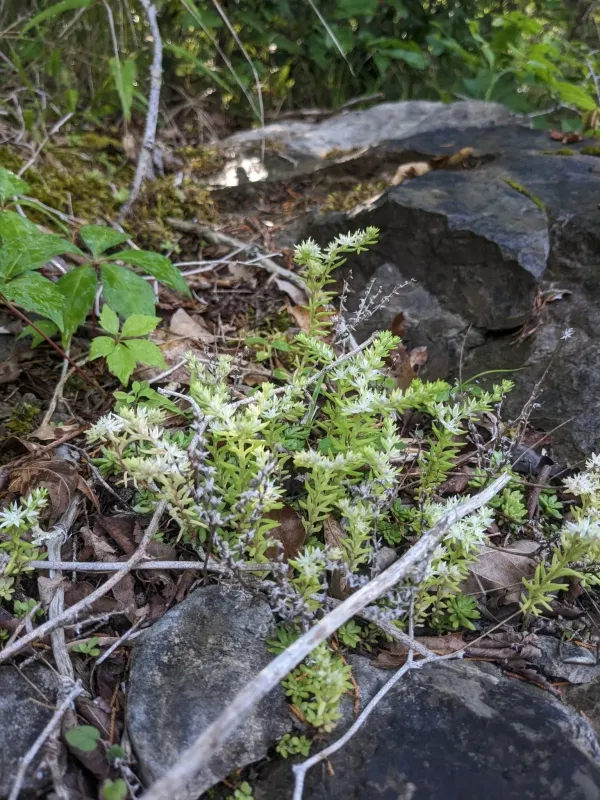
Nevius stonecrop (Sedum nevii) is a perennial herbaceous plant belonging to the Crassulaceae family. It is a low-growing succulent known for forming dense, evergreen mats that provide effective soil coverage and high ornamental value throughout the growing season.
The species originates from the mountainous regions of North America, having evolved to grow in harsh conditions such as limestone outcrops and rocky slopes. This evolutionary background makes the plant exceptionally well-suited for cultivation in areas with poor, stony, or gravelly soils.
Proper drainage is the most critical requirement for the successful cultivation of Sedum nevii. The soil must be loose and airy to prevent moisture accumulation, as the roots are highly susceptible to rot if allowed to sit in saturated or waterlogged environments for extended periods.
Exposure to full sunlight is essential for maintaining the plant's characteristic compact habit and vibrant leaf coloration. While the plant can tolerate partial shade, insufficient light often results in leggy growth, loss of foliage density, and increased susceptibility to environmental stress.
The cultural maintenance of this plant is minimal, focusing mainly on ensuring that the planting site remains dry and well-lit. Its high drought tolerance makes it an ideal candidate for low-maintenance landscaping, including green roofs, rock gardens, and xeriscaping projects.
Main diseases and pests
The primary threat to the health of Nevius stonecrop is the presence of fungal pathogens triggered by poor air circulation and excessive moisture. Root rot is the most common issue, often manifesting as a gradual yellowing and softening of the stems near the soil surface.
Pests such as aphids may occasionally congregate on succulent growth points during periods of active development. While usually minor, infestations should be monitored to ensure the plant's vigor is not compromised, especially during exceptionally dry or stressful weather conditions.
Mealybugs can become a nuisance in greenhouses or protected garden areas with poor airflow. These insects hide in the crevices between succulent leaves, necessitating careful visual inspection and the application of appropriate horticultural soaps if they are detected.
Slugs and snails may feed on the tender foliage, particularly during the wet spring months. Implementing physical barriers like crushed stone or gravel mulch around the plants is an effective, chemical-free way to deter these pests from reaching the vulnerable succulent tissue.
Management of these threats involves proactive cultural practices, such as choosing appropriate sites with high drainage and avoiding overhead irrigation. By keeping the foliage and the immediate root zone dry, most pathological and pest-related issues can be effectively mitigated.