
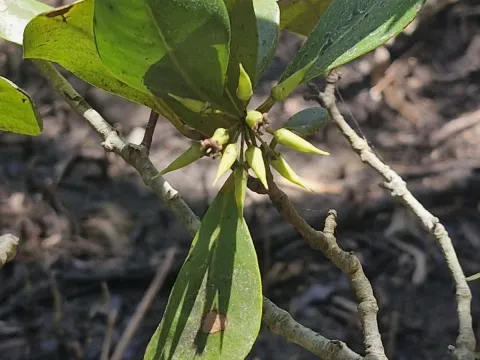
Aegiceras
Aegiceras
Aegiceras is a genus of trees and shrubs belonging to the Primulaceae family. Known as a significant component of mangrove ecosystems, this genus is predominantly represented by the species Aegiceras corniculatum, found in tropical and subtropical regions.
What the section contains

Aegiceras
These plants exhibit remarkable botanical adaptations, such as specialized salt-secreting glands on the leaves, allowing them to thrive in highly saline environments where other terrestrial plants would perish. Their structure enables survival in intertidal zones.
The climate requirements for Aegiceras include warm temperatures and high humidity year-round. It is highly sensitive to frost, which limits its distribution to equatorial and coastal areas where thermal stability is maintained by proximity to the ocean.
Soil conditions are strictly defined by the intertidal zone, where the plant occupies mudflats rich in organic sediment. The substrate must provide adequate anchorage for the root system to withstand the mechanical stress of tides and ocean currents.
Regarding agricultural or management practices, the focus remains on conservation. In its natural habitat, Aegiceras maintains a self-sustaining cycle, utilizing mineral influx from periodic tidal flooding to satisfy its nutrient requirements without human intervention.
The primary threats to Aegiceras populations are largely anthropogenic. Large-scale coastal development, port construction, and land reclamation projects contribute to the systematic destruction of the sensitive mangrove habitats necessary for this plant.
Biological threats include pests such as wood-boring insects and crustaceans that target seedlings and bark. In densely populated mangrove stands, certain types of fungal pathogens can spread, leading to decay in areas with poor water circulation.
Water pollution, particularly the accumulation of industrial chemicals and oil spills in estuaries, poses a severe risk to the health of the root system. Such pollutants block the gas exchange mechanisms that the plant relies on for respiration.
Climate change and subsequent sea-level rise are critical factors affecting future survival. If the rate of tidal inundation exceeds the plant's physiological capacity to adapt, large sections of the habitat may be lost to permanent flooding.
Effective management requires rigorous monitoring of water quality in surrounding estuaries. Protecting the integrity of the ecosystem remains the most critical measure for preventing disease outbreaks and ensuring the long-term viability of the species.