
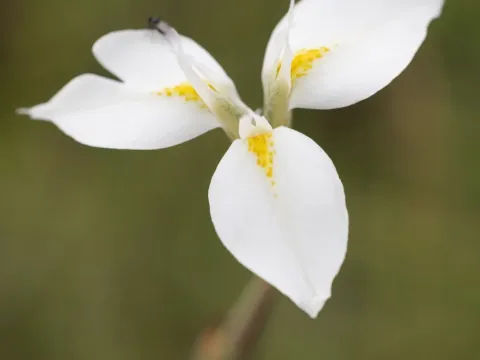
Moraea
Moraea Mill.
Planting Moraea corms in open ground is carried out in the spring once the soil temperature reaches 10-12 degrees Celsius. It is crucial to wait until the risk of late frosts has passed, as the plant is sensitive to cold temperatures.
What the section contains

Moraea
In regions with mild climates, autumn planting is possible, but it requires mandatory soil mulching. The planting depth for corms typically ranges from 5 to 8 centimeters, depending on their size and the soil's mechanical texture.
When grown in containers, planting can be performed at any time of the year provided that stable temperature conditions are maintained. A distance of at least 15 centimeters between plants is recommended to allow for optimal development of the leaf rosettes.
Including a drainage layer at the bottom of the planting hole is essential if the soil is heavy. This prevents moisture stagnation, which is critically dangerous for the plant's root system during the rooting phase.
The optimal planting substrate should be loose, well-aerated, and have a neutral or slightly acidic pH. Incorporating coarse sand or perlite is a common practice to improve the physical structure of the soil.
Moraea belongs to the Iridaceae family and is a perennial herbaceous cormous plant. Originating from South Africa, the crop has a high demand for intense light and warmth to thrive.
The crop requires sunny locations that are sheltered from strong winds. In conditions of poor lighting, flower stalks tend to stretch, lose stability, and often lodge, which significantly reduces the ornamental value of the planting.
The plant prefers moderate watering during its active growth period. During the flowering phase, soil moisture must be consistent, although overwatering and waterlogging lead to the rotting of corms and plant death.
During the dormancy period, which begins after the foliage dies back, watering should be stopped almost entirely. Moraea does not tolerate sub-zero temperatures well, so in temperate climates, the corms must be lifted for winter.
The plant responds well to potassium-phosphorus fertilizers during the budding stage. Nitrogen-based fertilizers should be limited to avoid excessive vegetative growth at the expense of flowering quality.
The primary threat to Moraea is fungal diseases that develop due to excessive soil moisture. Fusarium wilt and various root rots are among the most common issues encountered by growers.
Pests such as thrips and spider mites can attack the aerial parts of the plant during prolonged dry and hot weather. Modern systemic insecticides are effective for controlling these pest populations.
Disease prevention involves practicing crop rotation and thoroughly drying the planting material before winter storage. Damaged corms should be discarded to prevent the spread of infections to healthy stock.
Poor ventilation in greenhouses or polytunnels can trigger powdery mildew on the leaves. Maintaining regular air circulation is a critical component of successful agricultural management for this crop.
If the first signs of pathogens appear, infected plant parts must be removed, and the area should be treated with broad-spectrum fungicides. It is also important to maintain clean tools to avoid the mechanical transfer of spores.
The harvesting of corms is carried out in autumn after the leaves have naturally turned yellow and died back. At this point, the plant has completed its vegetative cycle, and the corms have accumulated nutrients for the next season.
Once lifted, the corms are gently cleaned of soil, washed, and disinfected in a weak fungicide solution. This process helps prevent the development of rot during the storage period over winter.
After the initial treatment, the material should be dried in a well-ventilated, dry location at a temperature of 20-25 degrees. It is vital to avoid direct sunlight during drying to prevent tissue burns.
Storage is best achieved in paper bags or boxes filled with sawdust in a cool environment with a temperature of 10-15 degrees. Under these conditions, the corms remain viable until the following spring.
Periodic inspection of stored corms throughout the winter allows for the early detection and removal of any decaying specimens. High-quality planting material is the foundation for uniform growth and abundant flowering in the coming season.