
Pistorinia hispanica
Pistorinia hispanica
Description
Growing requirements
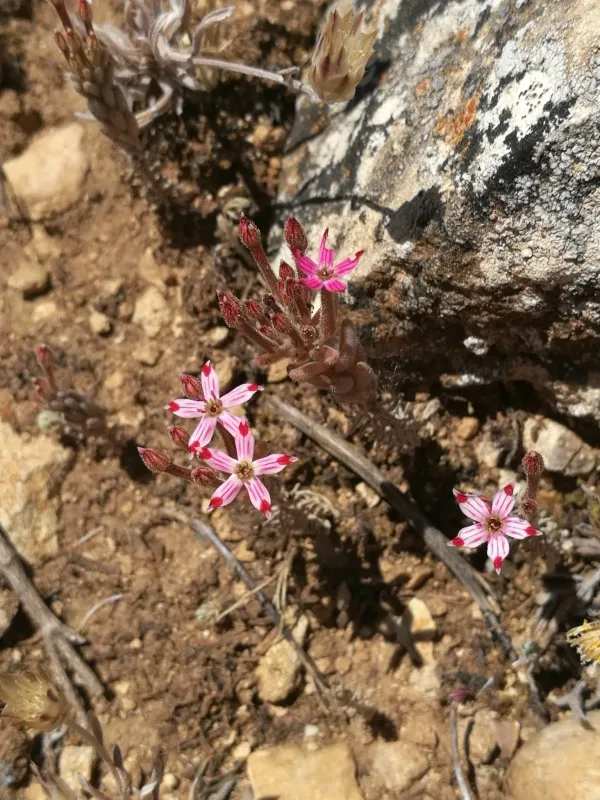
Pistorinia hispanica is a succulent plant species belonging to the Crassulaceae family. It is native to the Mediterranean region, particularly found in the wild across Spain, Portugal, and parts of Northern Africa, where it thrives in rocky, arid landscapes.
Botanically, it is classified as an annual succulent. Its primary structural feature is the presence of fleshy, moisture-storing leaves and stems, which allow the plant to endure the intense heat and dry spells typical of its natural habitat during the summer months.
The cultivation of this plant requires a substrate that provides excellent drainage. Sandy or gravelly soil mixtures are ideal, as the plant is highly susceptible to root rot if it is exposed to prolonged periods of dampness or waterlogged conditions.
Climate requirements include full solar exposure and warm temperatures. Pistorinia hispanica is not frost-tolerant, meaning it requires sheltered environments or greenhouse conditions in regions with cold winters to maintain healthy growth cycles.
In terms of agricultural or landscape use, this species is highly valued for its aesthetic appeal in xeriscaping. It is frequently employed in rock gardens and containers to provide decorative color through its distinctive, slender, and vibrant tubular flowers.
Main diseases and pests
The most significant threats to the health of Pistorinia hispanica are fungal diseases, specifically those triggered by poor ventilation and excess moisture in the soil or surrounding environment.
Pests such as mealybugs and spider mites represent the most common biological threats, often appearing when the plants are grown in sheltered or poorly ventilated areas.
Preventative measures should focus on maintaining a dry environment around the crown of the plant and ensuring that the watering regime is strictly controlled to avoid saturation.
Should an infestation occur, the application of targeted insecticides or acaricides is necessary, provided they are suitable for delicate succulent tissues.
Regular monitoring of the foliage and stem base is essential for early detection of potential threats, ensuring that corrective action can be taken before the damage becomes irreversible.