
Brassiophoenix schumannii
Brassiophoenix schumannii
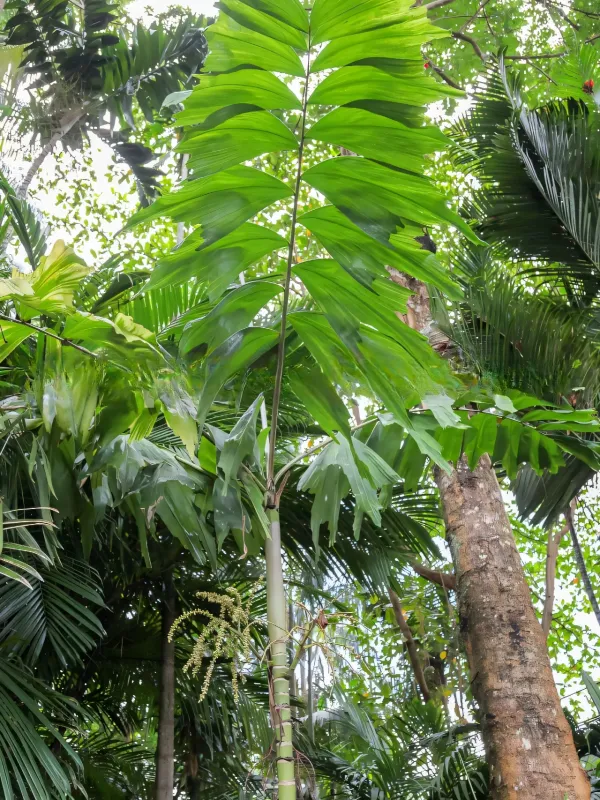
Description
Growing requirements
Brassiophoenix schumannii is a distinct member of the Arecaceae family. This tropical palm species is native to the rainforests of Papua New Guinea, where it thrives in understory conditions.
The plant requires well-draining, nutrient-rich soil to perform optimally. It is sensitive to soil compaction and waterlogging, which can severely restrict its growth and lead to root decay.
Regarding climate, this palm is strictly tropical and demands high humidity levels and constant warmth. It cannot withstand frost and struggles if temperatures drop below 15°C for extended periods.
The ideal light condition is dappled shade. Exposure to intense, direct afternoon sun often results in scorched leaves and reduced plant vigor, as it is naturally adapted to forest canopy light.
Agricultural management should focus on maintaining a steady moisture supply and applying balanced, slow-release fertilizers during the growing season to support the development of its pinnate leaves.
Main diseases and pests
Fungal pathogens represent the most significant threat to Brassiophoenix schumannii in cultivation, especially when air circulation is inadequate in confined indoor environments.
Root rot, driven by overwatering or poor drainage, is the primary cause of plant loss. Using a porous, peat-based growing medium is essential to mitigate these moisture-related risks.
Pests like spider mites thrive in low-humidity environments, leading to leaf discoloration and webbing. Frequent misting and maintaining humidity are critical preventive measures against these mites.
Scale insects often colonize the palm's stem and leaf undersides. Because they have a protective waxy covering, they can be difficult to eliminate without targeted systemic pesticides.
Monitoring the plant for early signs of infestation is vital. Implementing an integrated pest management program ensures the long-term health and aesthetic value of the specimen.