
Willughbeia coriacea
Willughbeia coriacea
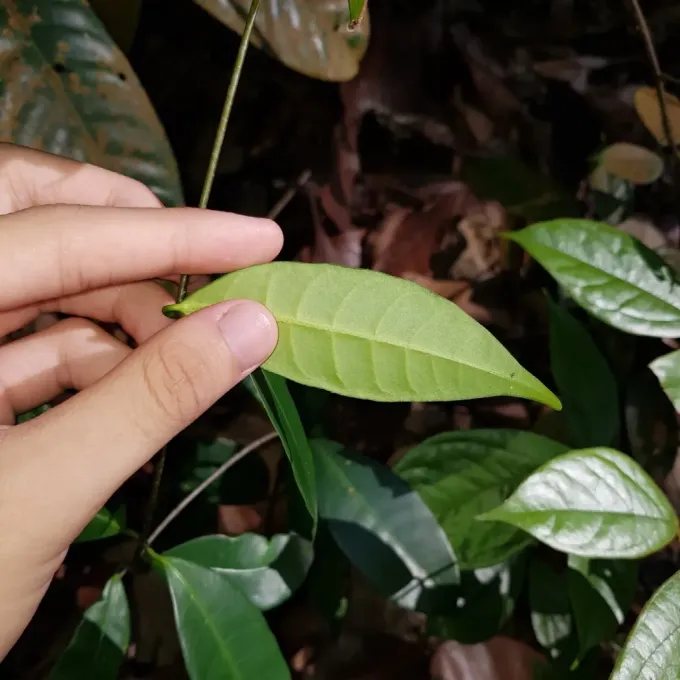
Description
Growing requirements
Willughbeia coriacea is a woody climbing vine that belongs to the Apocynaceae family. Native to the rainforests of Southeast Asia, specifically Borneo and the Malay Peninsula, it thrives in dense, humid tropical environments.
This plant demands high humidity and warm temperatures throughout the year. It performs best in nutrient-rich, deep soils that are well-drained, mirroring the leaf litter-rich environment of its natural habitat in the jungle understory.
In terms of light exposure, the plant prefers dappled sunlight. Full exposure to harsh tropical sun can damage the foliage, so it is often found climbing trees that provide natural protection and a vertical support structure.
Agricultural management of the vine requires the provision of robust vertical supports. Without them, the plant’s growth is restricted, and fruit production is significantly reduced compared to vines allowed to climb naturally.
Propagation is primarily handled through seeds. Due to the high latex content in the vine's tissues, grafting or cutting propagation can be challenging and typically requires professional horticultural expertise to achieve success.
Harvesting
The primary economic and dietary utility of the plant is its edible fruit. The fruits are typically round or oval with a leathery rind, containing a succulent, acidic to sweet pulp that is locally prized in regional markets.
Historically, Willughbeia coriacea was utilized as a secondary source of rubber. The latex extracted from the vines was harvested by traditional methods, contributing to the local production of rubber-based goods in rural tropical communities.
Harvesting fruits can be physically demanding as the vines often ascend high into the forest canopy. Harvesters must navigate the growth pattern of the vine to collect mature fruits without damaging the plant's delicate stems.
Post-harvest handling is critical because the stems contain latex that can contaminate the fruit surface if damaged during picking. Proper sorting and cleaning are essential to ensure the fruits remain palatable and attractive for consumption.
While not a large-scale commercial export crop, it remains an essential component of local forest-based agriculture. Its cultivation helps maintain the ecological balance while providing supplemental income and food security for smallholder farmers in its native range.