
Beaumontia jerdoniana
Beaumontia jerdoniana
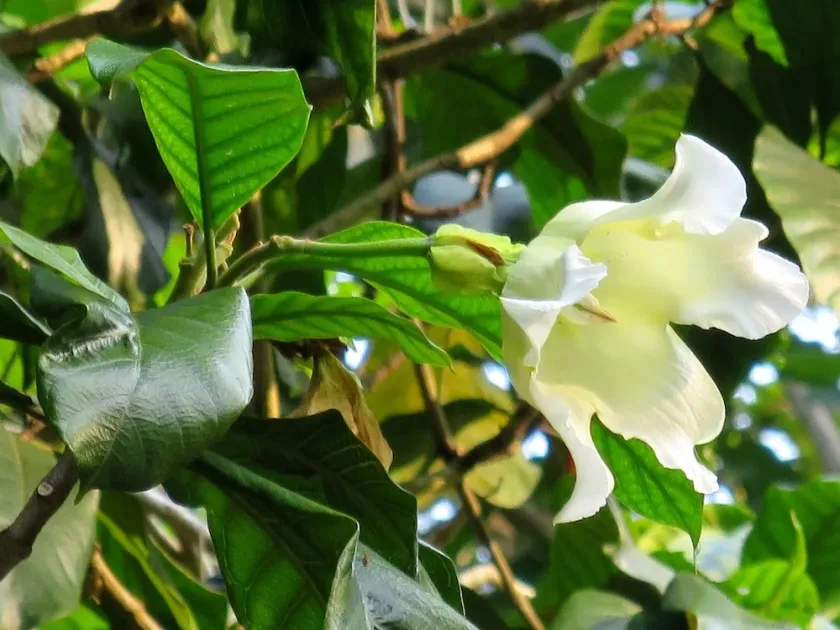
Description
Growing requirements
Beaumontia jerdoniana is a robust evergreen woody vine belonging to the Apocynaceae family. Native to the tropical forests of India and parts of Southeast Asia, this species is highly valued for its large, fragrant, trumpet-shaped flowers that bloom in clusters.
To thrive, this plant requires a tropical environment characterized by high humidity and warm temperatures throughout the year. It cannot survive frost; therefore, cultivation is generally restricted to conservatories, greenhouses, or indoor spaces in temperate climates.
The soil must be well-draining, rich in humus, and slightly acidic. A mix consisting of peat moss, pine bark, and perlite provides the necessary aeration for the roots while retaining just enough moisture to prevent the plant from drying out.
Light intensity plays a crucial role in the flowering process. While the plant appreciates bright, filtered sunlight, direct midday exposure can scorch the foliage. Placing it near a south-facing window with sheer curtains is an ideal indoor setup.
Regular maintenance involves consistent watering during the growing season and periodic misting to mimic a humid tropical atmosphere. In winter, the plant enters a semi-dormant phase where water frequency should be significantly reduced to prevent root rot.
Main diseases and pests
Common pests associated with this climber include mealybugs and spider mites, which thrive in dry indoor air. Regular inspection of the underside of leaves and keeping the ambient humidity high can significantly reduce the risk of infestation.
Fungal issues, specifically leaf spot and root rot, often occur due to poor air circulation or overwatering. Using a sterile potting mix and ensuring the container has adequate drainage holes is essential to mitigate these health risks.