
Yellow passion fruit
Passiflora edulis Sims f. flavicarpa O. Deg.
Description
Sowing dates
Sowing yellow passion fruit seeds is best performed in controlled greenhouse environments or protected nurseries to ensure high germination rates. Early spring is considered the ideal time for sowing, as increasing day length supports early seedling growth.
Seeds must be pre-soaked in warm water for 24 hours to soften the hard outer coat and improve uniformity. Planting them at a depth of 1–2 cm in a well-draining sterile potting mix, with temperatures maintained between 25–28°C, is essential for successful germination.
Seedlings should be transplanted into individual pots once they develop two sets of true leaves. Transitioning the young plants to their permanent outdoor location takes place after approximately 60–90 days, provided the risk of frost has passed completely.
Light intensity is critical during the initial growth phase. Providing supplemental lighting in the nursery stage prevents leggy growth, resulting in stronger, more vigorous vines that are better prepared for the stressors of outdoor cultivation.
Since the species is a fast-growing vine, providing adequate structural support like trellises is necessary from the start. Proper training of the main stem onto the trellis structure promotes better airflow and sunlight penetration through the future canopy.
Growing requirements
Yellow passion fruit is a member of the Passifloraceae family, originating from tropical South American regions. The plant thrives in warm, humid climates and is highly sensitive to cold, making it unsuitable for areas with significant temperature drops.
The ideal location for cultivation includes full sun exposure and protection from strong, drying winds. An ambient temperature range of 20–30°C is perfect, as temperatures below 10°C will significantly slow metabolic processes and overall plant development.
Soil requirements focus on fertility and drainage. The plants prefer deep, loamy soils with a pH between 6.0 and 7.0. Because the root system is prone to rot in saturated conditions, ensuring the site has excellent drainage is a non-negotiable step.
Adequate hydration is vital during the flowering and fruit-setting stages. Consistent soil moisture should be maintained; however, it is essential to avoid waterlogging during rainy periods, as this invites root diseases and impairs nutrient uptake.
Nutrient management involves regular applications of a balanced NPK fertilizer with higher potassium levels during the fruiting phase. Supplementing with organic compost mulch helps retain soil moisture and adds essential micronutrients to the topsoil layer.
Yield
The time from flowering to fruit maturity ranges between 60 and 80 days, depending on light conditions and temperature. Under optimal management, a single mature vine can produce an annual yield of 20–35 kg, making it a highly productive commercial crop.
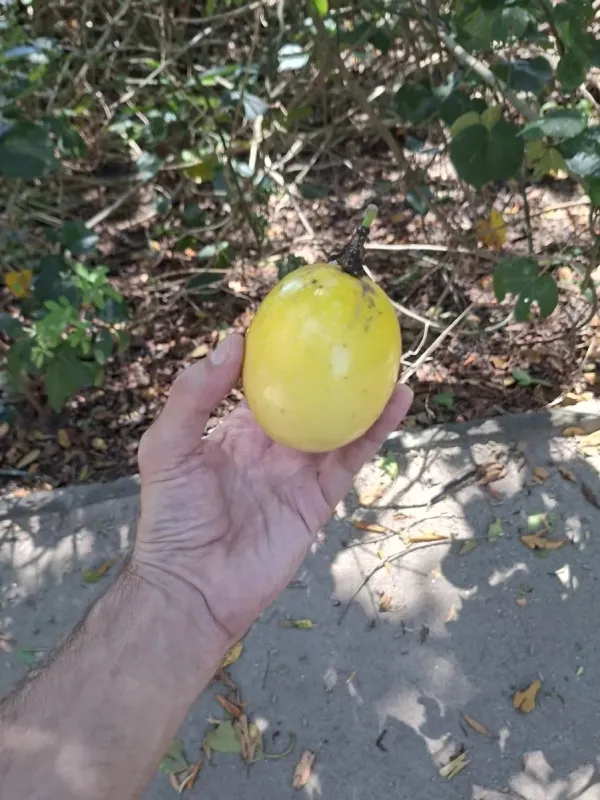
The fruit is a large, oval-shaped berry featuring smooth yellow skin. The interior contains aromatic, pulp-filled sacs around numerous seeds, characterized by a bright, acidic flavor profile that is highly prized in the juice and beverage industry.
Commercial applications are diverse, ranging from fresh fruit sales to the production of high-quality concentrates, purees, and jams. The yellow variety is specifically preferred for its higher acidity and aromatic intensity, which holds up well during industrial processing.
The plant also has secondary uses in the pharmaceutical and cosmetic sectors. Extracts from the leaves and flowers are known for their alkaloid content, which is used in traditional and modern medicinal formulations for wellness products.
Yield efficiency is directly tied to vine training and pruning intensity. By managing the trellis system to maximize light exposure to the fruiting nodes, farmers can significantly increase the total harvest volume per hectare in intensive setups.
Main diseases and pests
Fungal diseases like Fusarium wilt and Phytophthora blight are the most significant threats to yellow passion fruit production. These pathogens thrive in poorly ventilated, overly humid environments and can rapidly destroy a healthy root system.
Pests such as aphids, spider mites, and thrips are common in tropical fruit plantations. These insects attack young foliage and developing buds, leading to stunted growth, leaf deformation, and a reduction in the plant's overall photosynthetic capacity.
Nematode infestations can severely compromise root function, leading to yellowing leaves and plant decline. Prevention is centered on using nematode-free soil and selecting resistant rootstocks if the plantation is established in high-risk areas.
Integrated Pest Management (IPM) is the preferred approach, using beneficial insects (predators) to control populations. Chemical interventions should be strictly limited and timed to avoid residue buildup on the fruits before they reach harvestable size.
Sanitation practices are essential for disease control. Removing diseased vines and clearing dropped fruit and leaf litter regularly prevents the accumulation of inoculum in the orchard, helping to maintain a healthy growing environment throughout the season.
Harvesting
Harvesting should occur as the skin transitions to a deep, uniform yellow. Because the yellow variety often detaches from the vine upon full maturity, daily harvesting rounds are necessary to ensure the quality of the fruit and prevent damage.
Fruits should be harvested using shears to leave a small piece of the peduncle attached; this helps reduce moisture loss and entry points for pathogens. Proper post-harvest handling includes immediate sorting based on weight and appearance.
For industrial processing, fruit can be gathered in bulk, provided it is processed within 24–48 hours to ensure flavor integrity. Rapid cooling after harvest is recommended to slow down the metabolic decay of the high-sugar pulp inside the berries.
Storage should take place in climate-controlled facilities at 5–8°C with high relative humidity to minimize weight loss. With proper storage, the fruit can maintain its fresh quality for approximately two to three weeks before degradation begins.
Transporting yellow passion fruit requires ventilated containers that prevent heat buildup. Proper packing and stable temperature control during transit are essential to minimize losses and ensure that the product arrives at the market in premium condition.