
Passiflora amethystina and caerulea hybrid
Hybrids between Passiflora amethystina and Passiflora caerulea
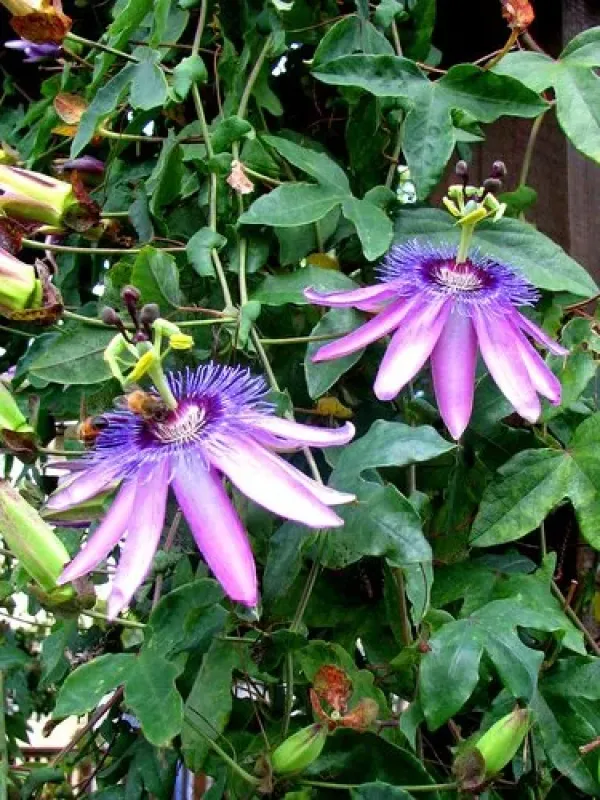
Description
Sowing dates
Propagation of this hybrid, resulting from the cross between Passiflora amethystina and Passiflora caerulea, is most effectively achieved through cuttings. This method ensures the preservation of the hybrid's unique traits and floral characteristics.
Seeds can be used for propagation, though they often do not breed true to the parent plant. Seeds require scarification and soaking in warm water to break their natural dormancy before planting in a sterile, well-draining seed-starting mix.
Cuttings should be taken from healthy, semi-hardwood shoots during the active growth phase. Using a rooting hormone can significantly increase the success rate and promote vigorous root development.
Maintaining a high humidity environment for young cuttings is essential. Using a propagator or covering the pots with clear plastic helps create a stable microclimate until roots are fully established.
Once the root system is well-formed, the plants should be gradually acclimatized to lower humidity levels before being transplanted into larger containers or outdoor soil.
Growing requirements
The hybrid thrives in bright, indirect light. While it appreciates morning sun, protecting it from intense afternoon heat is advisable, especially in warmer climates where leaf scorch can occur.
A loose, fertile, and well-draining potting medium is crucial for this vine. A mixture of peat moss, pine bark, and perlite provides the necessary structure to support healthy root growth while preventing compaction.
Watering should be consistent; the soil should be kept moist but never waterlogged. During the summer, ensure regular watering, while in the winter, allow the top layer of soil to dry out between applications.
As a climbing vine, this plant requires sturdy support structures such as trellises or wires. Regular pruning is recommended to control the growth, shape the plant, and encourage more abundant flowering.
Fertilization with a balanced, slow-release fertilizer during the growing season supports steady development. Occasionally applying a potassium-rich feed will enhance the vibrancy of the blooms.
Main diseases and pests
Spider mites are the most common pests affecting this hybrid, particularly in indoor or greenhouse settings with low humidity. They can cause stippling on the leaves and eventually leaf drop if left unchecked.
Whiteflies and aphids may also colonize the succulent stems of the passion flower. Regular monitoring and washing the leaves with a mild horticultural soap solution usually manage these infestations effectively.
Root rot caused by Phytophthora or other pathogens is a significant threat associated with overwatering or poor drainage. Ensuring excellent aeration around the roots is the best preventive measure.
Fungal issues like powdery mildew can appear when air circulation is poor. Improving spacing between plants and ensuring good airflow reduces the incidence of these fungal outbreaks.
If chemical interventions are necessary, always select products labeled for ornamental vines and follow safety guidelines to avoid damaging the delicate foliage or beneficial pollinators visiting the flowers.