
Passiflora laurifolia
Passiflora laurifolia L.
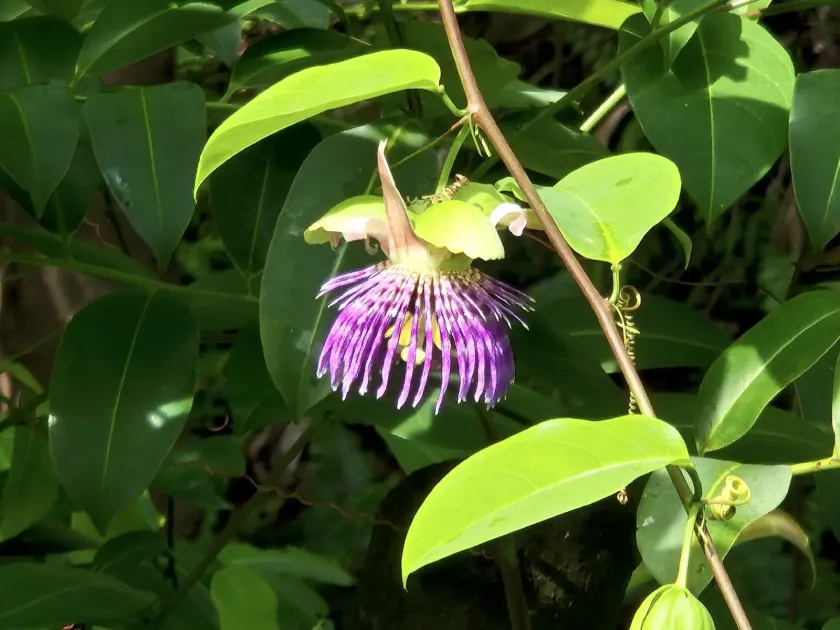
Description
Growing requirements
Passiflora laurifolia, commonly known as yellow granadilla, is a vigorous perennial vine belonging to the Passifloraceae family. It is native to tropical South America and the Caribbean.
The plant thrives in warm, humid tropical climates with temperatures ranging from 20°C to 30°C. It is frost-sensitive and requires greenhouse protection in non-tropical regions.
Well-drained, fertile loamy soils are ideal for this vine. The pH level should be kept close to neutral, as extreme acidity or alkalinity can negatively affect nutrient uptake.
High levels of solar radiation are essential for flower bud initiation and fruit development. In greenhouse environments, supplementary lighting may be necessary during cloudy seasons.
Regular irrigation is vital to maintain consistent soil moisture, though waterlogging must be avoided to prevent root rot, especially during the dormant or cooler periods.
Yield
The primary economic focus of this crop is fruit production. The fruits are prized for their refreshing flavor and are widely used in juices, smoothies, and culinary desserts.
An average fruit weighs approximately 100-150 grams and features a smooth, leathery yellow-green rind that resembles a bay leaf in appearance.
Yield capacity is influenced by plant age, pollination quality, and structural support systems. Trellising is essential to manage the vine growth and maximize sunlight exposure.
Hand-pollination is often practiced in commercial plantations to ensure a high fruit set rate, as natural pollinator activity might be insufficient in confined spaces.
The fruit contains high amounts of vitamin C, antioxidants, and dietary fiber, making it a valuable specialty crop for health-conscious markets globally.
Main diseases and pests
Common pests include aphids, spider mites, and whiteflies, which can cause significant foliage damage and weaken the plant, reducing its photosynthetic capacity.
Root-knot nematodes can be a major challenge in soil-based cultivation, necessitating the use of disease-free propagation material or sterilized soil media.
Fungal diseases like anthracnose can affect leaves and fruits under high humidity conditions. Improving air circulation is the most effective cultural control method.
Integrated Pest Management (IPM) strategies, including biological control using beneficial insects, are recommended for sustainable production in greenhouses.
Regular monitoring of plant health and rapid sanitation of infected plant parts are crucial to prevent the spread of viral or bacterial pathogens.
Harvesting
Harvesting begins when the fruit skin transitions from green to a deep yellow-orange or yellow-green hue, indicating optimal maturity.
Fruits are harvested manually by cutting the peduncle with shears to ensure the skin remains intact, which is critical for extending shelf life.
The harvest period is typically staggered due to the asynchronous flowering cycle, requiring frequent inspections of the plantation to gather mature fruit.
Post-harvest handling involves sorting by size and maturity, followed by immediate cooling to 10-12°C to maintain freshness during logistics.
Proper storage prevents rapid dehydration of the rind, ensuring that the fruit maintains its aesthetic and organoleptic qualities until it reaches the end consumer.