
Chinese honeysuckle
Lonicera tragophylla Hemsl.
Description
Growing requirements
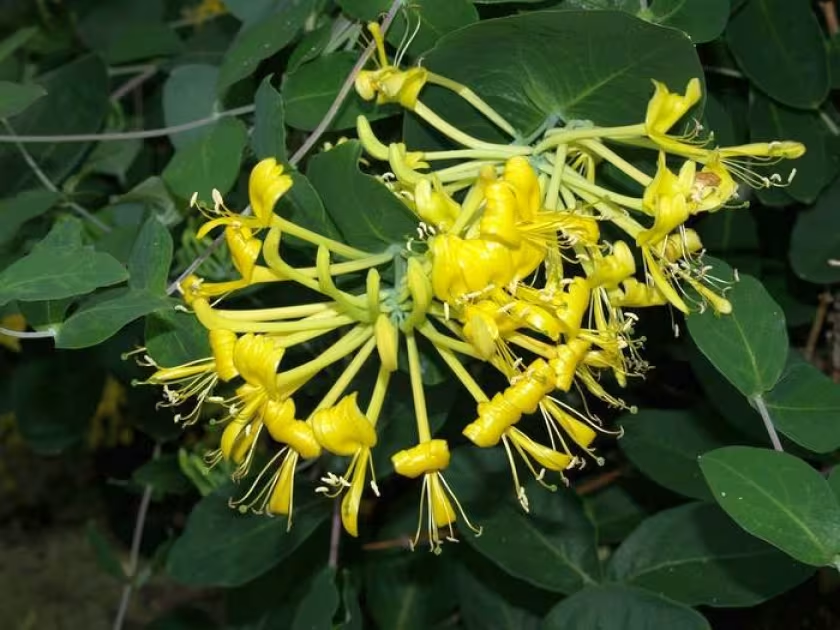
Chinese honeysuckle (Lonicera tragophylla Hemsl.) is a vigorous deciduous climber belonging to the Caprifoliaceae family. Originally native to the mountainous regions of central and western China, this species is highly valued for its striking, large golden-yellow flowers.
The plant grows as a woody vine, capable of reaching significant heights when provided with strong supports like trellises, fences, or pergolas. Its foliage consists of large, elliptical leaves that are dark green above and glaucous underneath, providing excellent visual density.
This crop thrives in fertile, well-draining, and moisture-retentive soils with a neutral or slightly alkaline pH. It is crucial to ensure that the soil remains consistently moist, as the plant is sensitive to dehydration, particularly during the hot summer months.
It prefers a semi-shaded position where it receives morning sun and partial afternoon shade. While it shows good cold hardiness once established, young plants may benefit from protective mulch and shelter during their first few years in more temperate climates.
Horticulturally, it is primarily used for vertical landscaping. Due to its impressive floral display and vigorous habit, it is an ideal choice for covering unsightly structures or creating natural screens in a garden setting.
Main diseases and pests
Common pests affecting this vine include aphids, which frequently target new growth. Regular inspection and the application of horticultural oils or insecticidal soaps can manage these infestations effectively without damaging the plant.
Powdery mildew is the most prevalent fungal disease, especially in areas with poor airflow and high humidity. Maintaining proper spacing and pruning for ventilation are essential preventative measures against fungal infections.