
Italian honeysuckle
Lonicera x italica Tausch
Description
Growing requirements
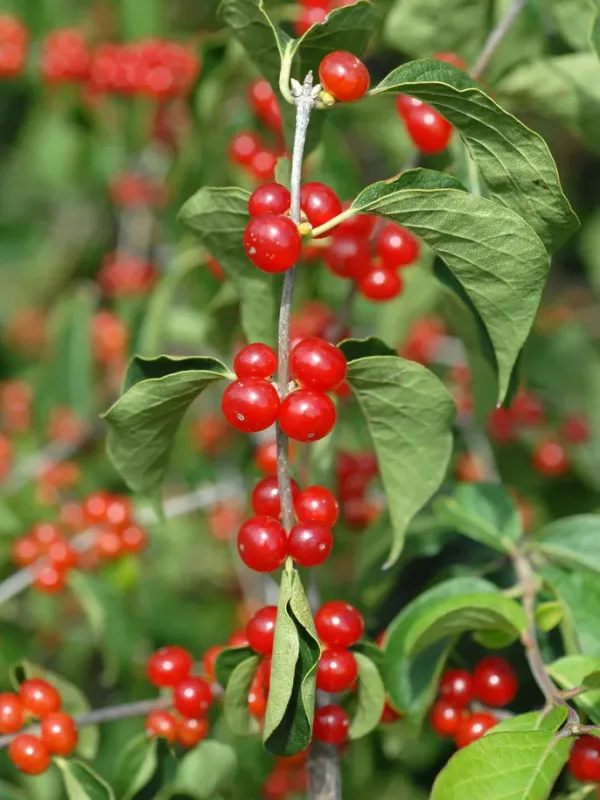
Italian honeysuckle (Lonicera x italica) is a popular climbing vine belonging to the Caprifoliaceae family. It is a garden hybrid known for its vigorous growth habit and highly fragrant, tubular flowers that bloom throughout the summer season.
This plant thrives in sunny locations with partial shade, especially during the hottest part of the day. It requires well-drained, fertile soil rich in organic matter to support its rapid development and prolific flowering cycles.
Climatic requirements are moderate, as the plant prefers temperate conditions. In regions with harsh winters, it is advisable to provide winter protection to ensure that the vine survives and produces new shoots in the spring.
Agrotechnical care includes consistent watering, particularly during dry spells, to maintain soil moisture. Occasional pruning is necessary to control the plant's spread and to remove any dead or diseased wood, which encourages fuller growth.
In landscaping, Italian honeysuckle is widely used for vertical structures such as trellises, arbors, and pergolas. It serves as a beautiful privacy screen when trained against fences or external building walls.
Main diseases and pests
The primary disease affecting this honeysuckle species is powdery mildew, which often appears as a white fungal growth on leaves during humid weather with poor air circulation.
Aphids are the most common pests that target the plant, feeding on succulent new growth. Their presence can lead to stunted development and the transmission of secondary viral infections.
Effective management involves applying appropriate fungicides when mildew is detected and using insecticidal soaps or systemic pesticides to control aphid populations before damage becomes severe.
Good cultural practices, such as ensuring proper spacing between plants and maintaining adequate airflow, are essential for reducing the incidence of fungal and pest-related problems.
Regular monitoring of the foliage and stems allows gardeners to intervene early, preventing potential outbreaks and ensuring the overall health and vigor of the Italian honeysuckle.