
Etruscan honeysuckle
Lonicera etrusca Santi
Description
Growing requirements
Etruscan honeysuckle (Lonicera etrusca Santi) is a vigorous climbing shrub belonging to the Caprifoliaceae family. Native to the Mediterranean region, this plant has adapted to warm, sunny environments and is widely appreciated in landscaping for its ornamental climbing habit.
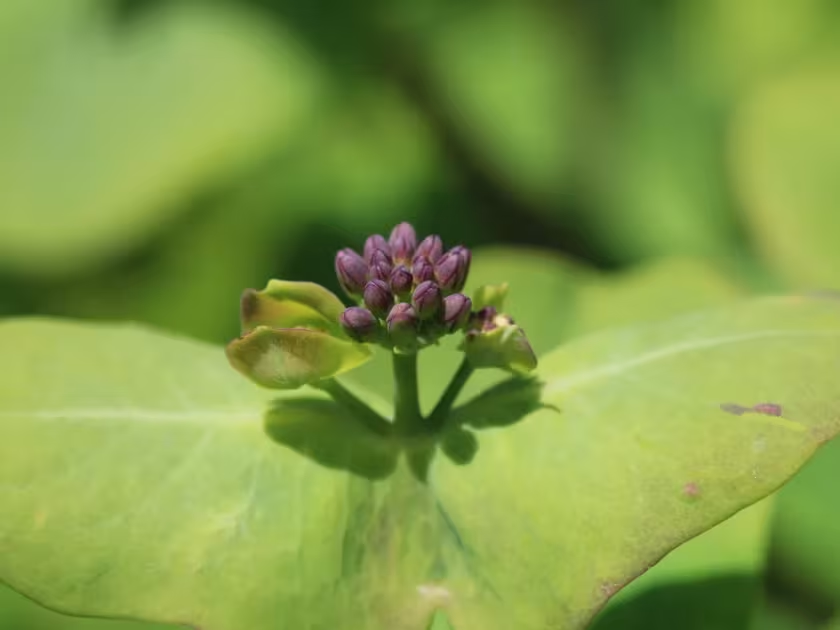
The plant features woody stems and ovate leaves, with the characteristic trait that the uppermost leaf pairs often fuse to form a disk surrounding the stem. This botanical adaptation provides a unique appearance, complementing the fragrant, tubular flowers that bloom in clusters.
Cultivation requires a position in full sun to partial shade, where the plant can climb effectively on structures such as fences, pergolas, or trellises. It thrives best when protected from harsh winter winds, which can damage tender new growth in early spring.
In terms of soil, Lonicera etrusca demands well-drained, fertile substrates that remain moist but never waterlogged. It performs best in soils with a neutral to slightly alkaline pH, making it highly compatible with various garden soil types if proper drainage is ensured.
The agronomic management includes regular pruning to manage its vigorous growth and stimulate flowering. By removing old or weak branches, gardeners can maintain a tidy structure and ensure that the plant redirects its energy into producing new, bloom-bearing shoots.
Main diseases and pests
The most common pests affecting the Etruscan honeysuckle are aphids, which cluster on the young shoots and undersides of leaves during the growing season. Early detection and the use of targeted insecticides or natural soap sprays are effective methods of management.
Powdery mildew is a frequent fungal threat, especially in conditions where airflow is restricted or humidity is excessively high. To minimize this risk, it is important to provide sufficient spacing between plants and avoid overhead watering.
Fungal leaf spots may appear if the plant is stressed by poor soil conditions or improper watering regimes. Removing and destroying fallen or infected leaves is a critical step in preventing the spread of spores within the garden environment.
Winter damage to the stems can predispose the plant to further fungal attacks in the spring. In regions with freezing winters, providing organic mulch at the base is essential to protect the root system and promote successful regrowth once temperatures rise.
Maintaining a balanced nutrition program helps the plant develop stronger tissues, making it more resilient against various pests and diseases that typically attack weaker specimens under drought or nutrient deficiency.