
Lonicera caprifolium
Lonicera caprifolium L.
Description
Growing requirements
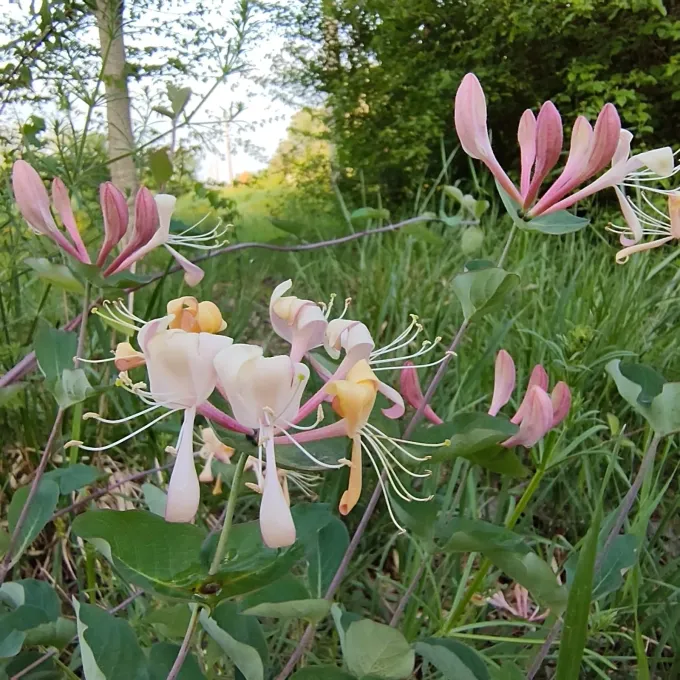
Lonicera caprifolium, commonly known as perfoliate honeysuckle, is a perennial deciduous climber belonging to the Caprifoliaceae family. Native to southern and central Europe, it has become a popular choice for vertical gardening due to its fragrant flowers and fast growth.
The plant is characterized by its distinct foliage, where the upper leaves are fused around the stem, forming a disc. This botanical adaptation provides a unique architectural appearance, making it highly valued in landscape design.
It thrives in sunny or partially shaded locations with moist, fertile, and well-drained soil. It prefers a neutral to slightly alkaline soil pH and requires consistent organic matter to support its vigorous annual growth.
As a climbing species, it demands sturdy support structures such as trellises, fences, or arbors. Providing proper orientation towards the sun is essential for blooming, as shaded positions may lead to sparse flowering.
Winter hardiness is moderate; in colder climates, it is advisable to mulch the root zone to prevent excessive frost damage. The plant responds well to regular training, ensuring that vines do not become tangled or overly heavy in one section.
Main diseases and pests
Honeysuckle aphids are the most common pests affecting Lonicera caprifolium, particularly during the warm spring months. They colonize new shoots, causing leaf curling and growth stunting if not treated promptly.
Powdery mildew is a significant threat, especially in humid conditions with poor air circulation. Proper spacing between plants and regular pruning are crucial preventive measures to reduce humidity around the foliage.
Leaf spot diseases, caused by various fungi, may develop during prolonged rainy periods. Infected foliage should be removed and destroyed to minimize the buildup of fungal spores in the garden area.
Spider mites can become problematic during hot and dry spells, often indicated by fine webbing and yellowing leaves. Consistent monitoring and moisture management can help mitigate these infestations effectively.
Integrated pest management, including natural predator attraction and selective use of fungicides, is recommended for long-term health. Keeping the plant vigorous through proper fertilization often acts as the best natural defense against pests.