
Bearberry honeysuckle
Lonicera involucrata (Richardson) Banks ex Spreng.
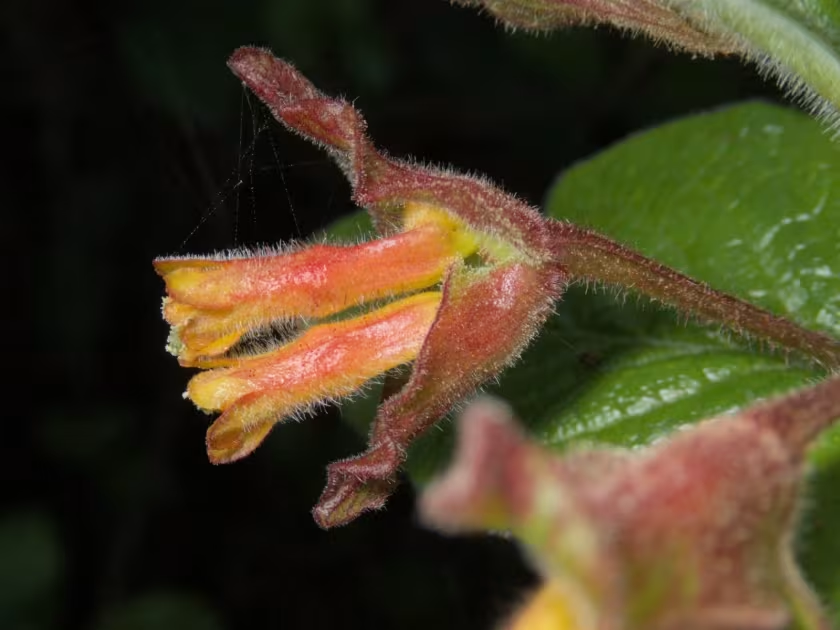
Description
Growing requirements
Bearberry honeysuckle (Lonicera involucrata) belongs to the Caprifoliaceae family. It is a deciduous shrub native to western North America, typically found in moist meadows, forests, and along stream banks.
The species is highly adaptable to cold climates and prefers areas with consistent soil moisture. It thrives in soils that are rich in organic matter, supporting strong root development and lush foliage production.
While it can tolerate full sun in cooler climates, it performs best in partial shade. In warmer regions, protection from the harsh afternoon sun is essential to prevent leaf scorching and excessive moisture loss.
Proper agricultural practice involves regular watering during dry spells and the application of organic mulch around the base to maintain soil temperature and moisture levels. The plant generally requires minimal fertilization if the soil is healthy and fertile.
The plant is widely used for ecological restoration and ornamental landscaping due to its unique bracted flowers. Although the fruits are not edible for humans, they provide a valuable food source for local bird populations in the wild.
Main diseases and pests
The shrub is relatively hardy, but it can be susceptible to powdery mildew under conditions of poor air circulation. Ensuring sufficient spacing between plants is the primary strategy to prevent fungal outbreaks during humid seasons.
Insect pests, particularly aphids, may cluster on tender new growth. Integrated pest management, including the encouragement of natural predators like ladybugs, is highly recommended to manage potential infestations effectively.