
Tennessee yellow-eyed grass
Xyris tennesseensis
Description
Growing requirements
Tennessee yellow-eyed grass (Xyris tennesseensis) belongs to the Xyridaceae family. It is a distinctive perennial herb recognized primarily for its rarity and its specialized adaptation to specific wetland environments.
The plant is native to the southeastern United States, including states like Tennessee, Alabama, and Georgia. It is typically found in limestone-influenced wetlands, specifically in seepage fens where groundwater reaches the surface.
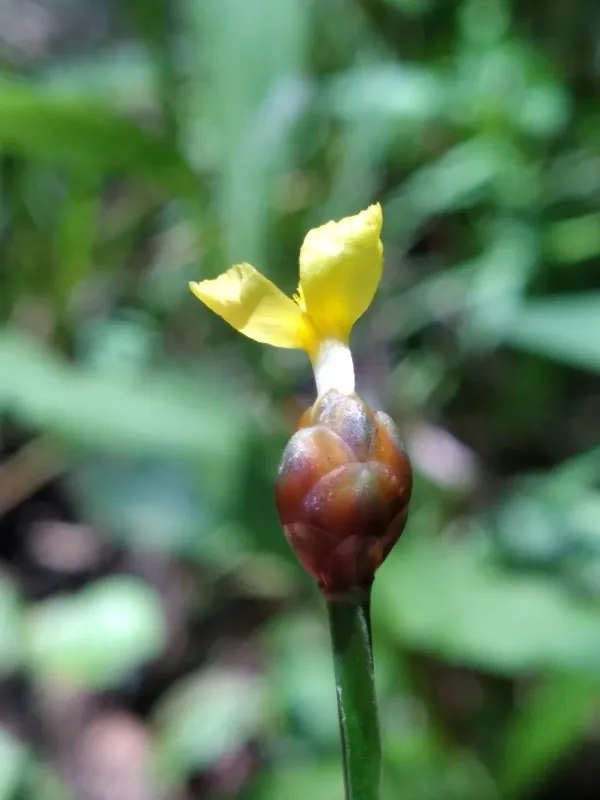
Botanically, it features a cluster of linear, basal leaves and tall, erect scapes. Each scape is topped with a dense, conelike spike containing small, bright yellow flowers that open primarily during the morning hours.
Regarding soil and moisture requirements, the plant is a strict hydrophyte. It demands consistently saturated, mineral-rich substrates, particularly those derived from limestone, which provides the necessary pH balance for its successful growth.
The species has no commercial agricultural value or cultivation history as a crop. It is managed strictly for conservation purposes, as habitat loss poses a significant threat to its surviving wild populations.