
Xyris capensis
Xyris capensis
Description
Growing requirements
Xyris capensis, commonly known as a type of yellow-eyed grass, is a perennial herbaceous plant belonging to the Xyridaceae family. This species is naturally adapted to moist, marshy environments and the edges of wetlands, necessitating high soil moisture levels for healthy development.
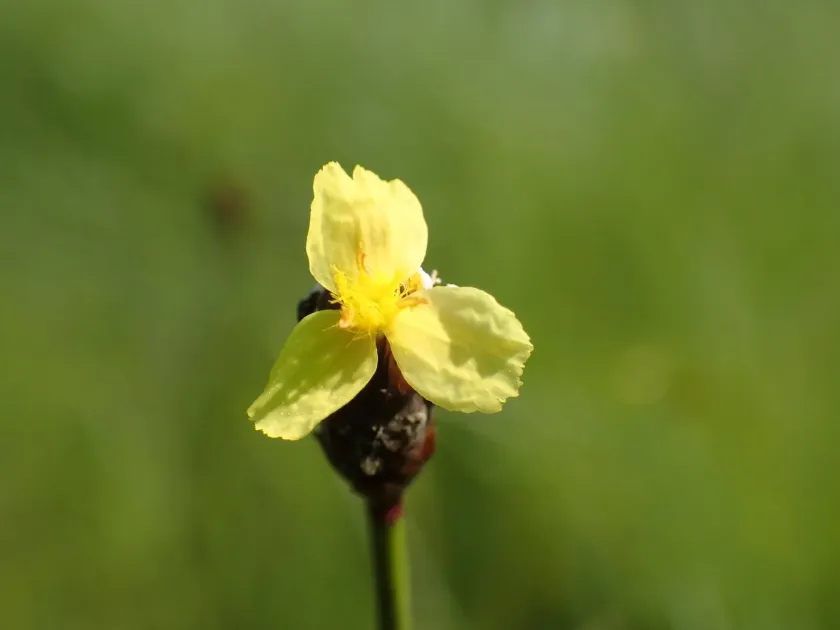
Botanically, the plant features narrow, linear leaves arranged in a basal rosette, accompanied by long, slender scapes. These stems terminate in distinctive, head-like inflorescences containing small yellow flowers that are protected by overlapping bracts, giving them a cone-like appearance.
Successful cultivation requires acidic soils that remain consistently wet or waterlogged. The plant thrives under full sun exposure, as sufficient light intensity is crucial for stimulating its bloom cycle and maintaining vigorous plant architecture.
In regions with distinct winter cycles, protection against freezing is essential, as the root system is adapted to subtropical or tropical conditions. Proper moisture management in the substrate is the most critical factor for ensuring long-term survival in garden settings.
The primary use of this species is within specialized aquatic and ornamental landscaping, particularly for framing water features. It also serves as a significant subject for ecological study regarding its specialized adaptation to harsh, water-saturated soil environments.