
Xyris difformis
Xyris difformis
Description
Growing requirements
Xyris difformis is a perennial herbaceous plant belonging to the Xyridaceae family. It is naturally adapted to wetland habitats, frequently found in bogs, marshes, and along the margins of ponds or acidic sandy depressions.
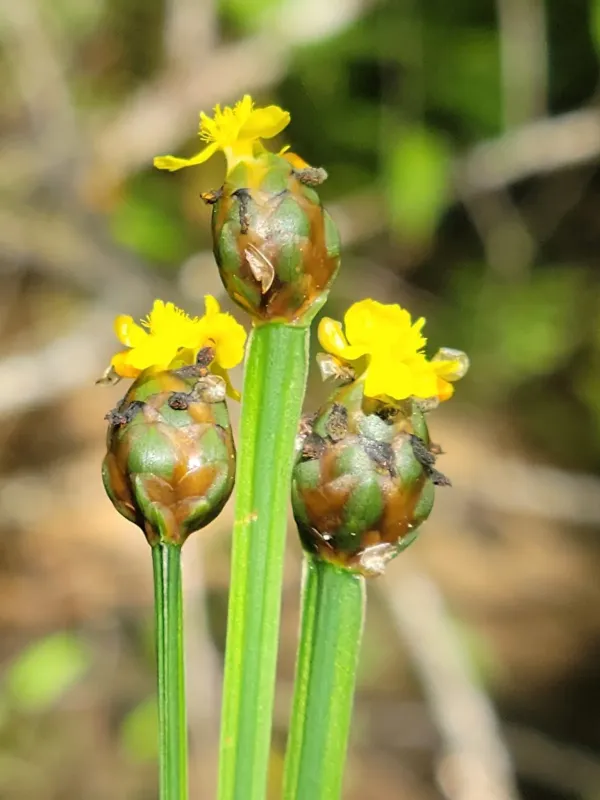
The botanical structure of this crop includes a basal rosette of linear, grass-like leaves and distinct, solitary flowering spikes atop erect scapes. These spikes produce small, yellow flowers that typically bloom during the summer months.
Growth requirements are strict, demanding permanently moist, acidic soils, typically composed of sand or peat. The plant lacks significant drought tolerance and relies heavily on the constant presence of water to maintain its physiological functions.
Regarding climate, it thrives in warm, temperate to subtropical environments with high exposure to direct sunlight. Providing adequate light intensity is crucial for ensuring the structural integrity of the stems and the development of reproductive organs.
In terms of agricultural and landscape utility, Xyris difformis is primarily utilized for wetland restoration and the aesthetic planting of aquatic environments. It serves as an effective soil binder, helping to prevent erosion in sensitive water-logged areas.