
Xyris complanata
Xyris complanata
Description
Growing requirements
Xyris complanata, commonly known as a type of yellow-eyed grass, is a perennial herb belonging to the Xyridaceae family. Native to parts of Australia and Southeast Asia, it typically thrives in marshy habitats, wet sandy soils, and along the edges of permanent wetlands.
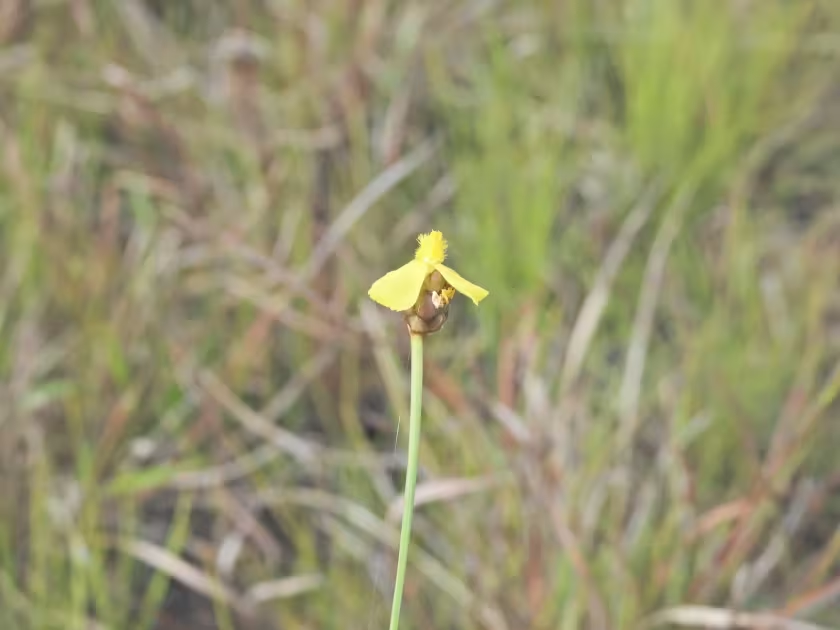
The plant is characterized by its linear, grass-like basal leaves and distinct flattened scapes (flower stalks) that give the species its name. It produces dense, cone-like flower heads containing small, yellow, ephemeral flowers that bloom briefly under direct sunlight.
To cultivate this species successfully, one must replicate its natural bog-like environment. This requires consistently waterlogged, acidic soil and full sun exposure. The roots must never be allowed to dry out, making this plant ideal for water gardens or specialized damp landscape features.
The soil profile should be nutrient-poor, matching the acidic peat or sandy substrates found in its natural habitat. High levels of fertilizers or alkaline soil amendments can severely inhibit the plant's growth and potentially lead to the decline of the root system.
Climatic requirements are strictly tied to tropical and subtropical conditions. In non-native environments, Xyris complanata is often treated as a container plant in greenhouses or conservatories to protect it from freezing temperatures, as it possesses little to no frost tolerance.
Harvesting
Propagation is primarily achieved through the careful division of established clumps during the dormant season. Seed harvesting is also possible; the seeds are contained within the hardened, mature flower heads, which should be collected once the bracts begin to turn brown and dry out.