
Baldwin's yellow-eyed grass
Xyris baldwiniana
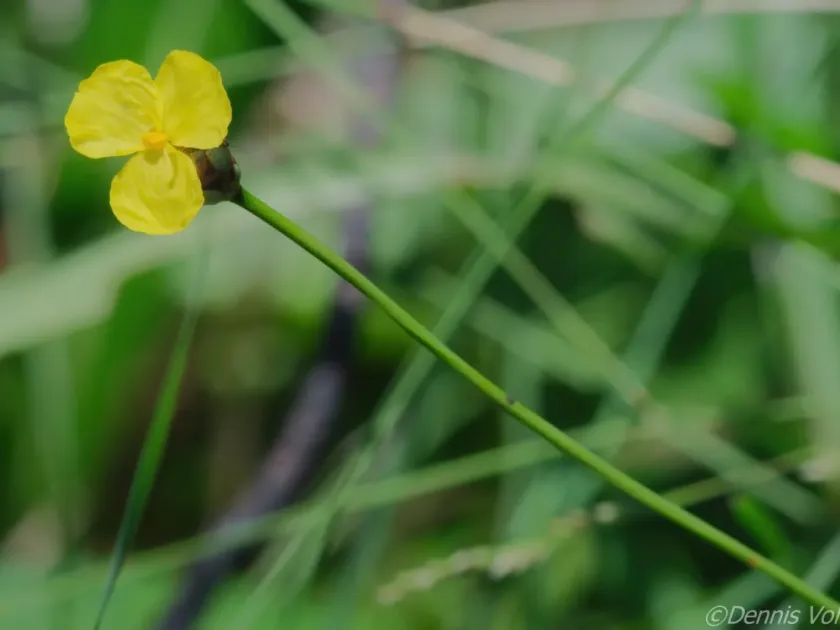
Description
Growing requirements
Baldwin's yellow-eyed grass (Xyris baldwiniana) is a perennial herbaceous plant belonging to the Xyridaceae family. It is a specialized species uniquely adapted to thrive in permanently saturated environments that many other plants cannot tolerate.
The plant is native to the southeastern United States, commonly inhabiting wet pine flatwoods, savannas, and seepage areas. It typically grows in acidic, sandy soils where the water table remains at or near the surface for extended periods throughout the growing season.
The botanical structure consists of slender, grass-like leaves emerging from a basal rosette. It produces a distinct, firm stalk topped with a cone-like inflorescence. The small, yellow, three-petaled flowers open individually and are highly attractive, characteristic of the yellow-eyed grass genus.
Successful cultivation requires full sun exposure and consistent moisture levels. The substrate must be kept damp; even short periods of drought are detrimental to the plant's health. Growers should mimic natural seepage conditions to provide the necessary hydro-balance.
In terms of practical use, this species is primarily utilized in specialized horticulture, particularly for bog gardens and restoration projects focused on wetland ecosystems. Its unique appearance makes it a niche ornamental choice for landscaping areas with poor drainage or permanent water features.