
Xyris ambigua
Xyris ambigua
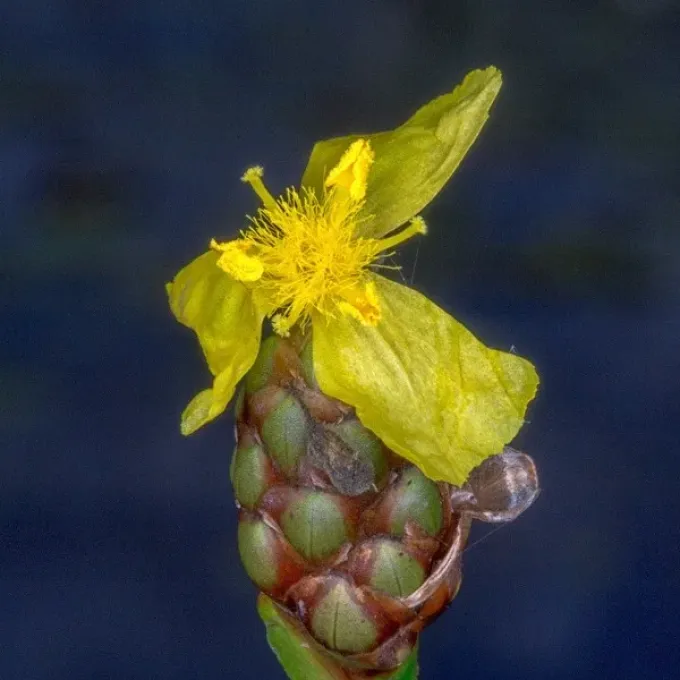
Description
Growing requirements
Xyris ambigua, commonly known as a type of yellow-eyed grass, belongs to the Xyridaceae family. It is a perennial herbaceous plant naturally adapted to nutrient-poor, saturated, and acidic wetland habitats, often found in sandy bogs.
The native range of this species is primarily the southeastern United States. It flourishes in subtropical climates where high moisture levels and warm temperatures facilitate its growth cycle throughout the season.
Cultivation requires specific soil conditions, specifically acidic, sandy, or peaty substrates. Proper moisture retention is crucial, as the plant cannot thrive in dry environments or in soils with high alkalinity, which negatively impact its nutrient uptake.
Botanically, the plant is characterized by a basal rosette of narrow, grass-like leaves. Its defining feature is the rigid, tall scape terminated by a dense, cone-shaped inflorescence that produces yellow flowers, distinct from other wetland flora.
Sunlight requirements are high, as Xyris ambigua is a heliophilic species. It demands open areas with full sun exposure, as any significant shading will lead to stunted growth and reduced vigor of the entire plant population.
Main diseases and pests
The primary threat to this species is the degradation of its natural wetland habitat, particularly through drainage and land reclamation. Such changes in hydrology directly result in the loss of favorable growing conditions.
In managed conditions, the plant is susceptible to fungal pathogens like root rot when soil aeration is insufficient. Stagnant air and poor drainage within the growing medium are major triggers for these health issues.
Pests are generally less common, but specialized insect larvae may target the reproductive parts, specifically the floral spikes, during the flowering stage, which can hinder seed production and population expansion.
Intense competition from more aggressive invasive species and vigorous wetland grasses often poses a major challenge. Without proper manual weeding or management, Xyris ambigua may be outcompeted for vital resources like light and root space.
Preventive maintenance, including monitoring for weed encroachment and maintaining specific acidity levels in the soil, remains the most effective strategy for ensuring the long-term viability of the plant in a controlled environment.