
Xyris stricta
Xyris stricta
Description
Growing requirements
Xyris stricta belongs to the Xyridaceae family. This perennial herbaceous plant is naturally found in moist, marshy environments, along the edges of water bodies, and in sandy soils where the water table remains consistently high throughout the growing season.
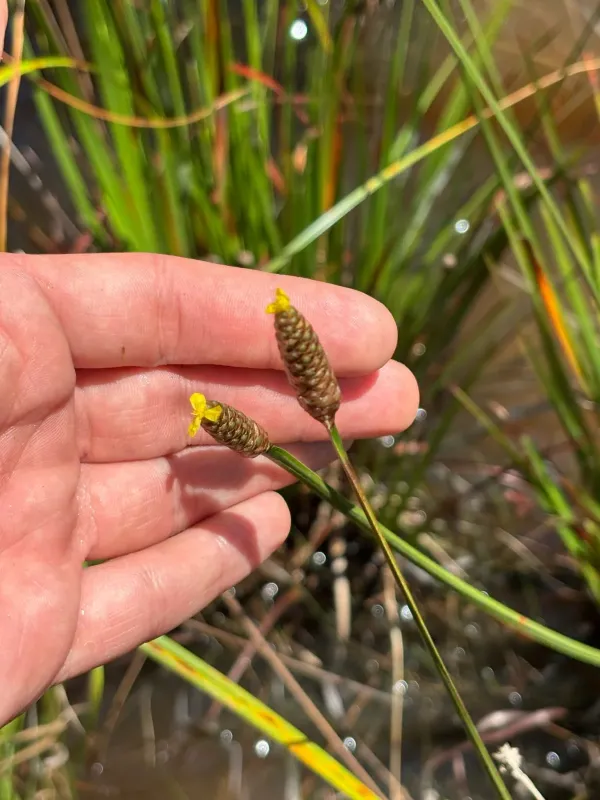
The plant features narrow, linear leaves organized in a basal rosette and erect flowering stalks topped with dense, head-like inflorescences. It is well-adapted to nutrient-poor environments, which results in a relatively compact and efficient root system suitable for wetland conditions.
Successful cultivation of Xyris stricta requires high moisture levels in the substrate and full sun exposure. The crop is extremely sensitive to desiccation, making moisture management the most critical factor for its survival. Optimal pH levels for the soil should fall within a slightly acidic to neutral range.
From an agronomic perspective, this species is not considered a mass-produced agricultural crop; however, it is highly valued for wetland restoration and landscape architecture. Propagation is typically achieved through seeds or by dividing the rhizomes during the period of vegetative dormancy.
Xyris stricta displays excellent tolerance for waterlogged soils but struggles in saline conditions. Growers must consider regional climatic patterns, as the species prefers mild climates and performs best without extreme fluctuations in temperature during the winter months.
Main diseases and pests
The main threats to Xyris stricta plantings are fungal infections, which often develop if root aeration is compromised in stagnant water environments. Maintaining proper spacing is essential to ensure adequate airflow and reduce the risk of disease spread.
Pests such as certain bog-dwelling beetles or nematodes can occasionally damage the root system during periods of extreme heat or drought stress. To protect the plantings, it is recommended to keep the area free of weeds that could serve as alternative hosts for pathogens.