
Xyris smalliana
Xyris smalliana
Description
Growing requirements
Xyris smalliana is a perennial herbaceous plant belonging to the Xyridaceae family. This species is biologically adapted to thrive in high-moisture environments and is commonly found in marshes, bogs, and along the banks of shallow wetlands.
The plant is native to the southeastern regions of North America. Its natural range encompasses coastal plains where it favors acidic, sandy, or peaty substrates that provide consistent access to water throughout the growing season.
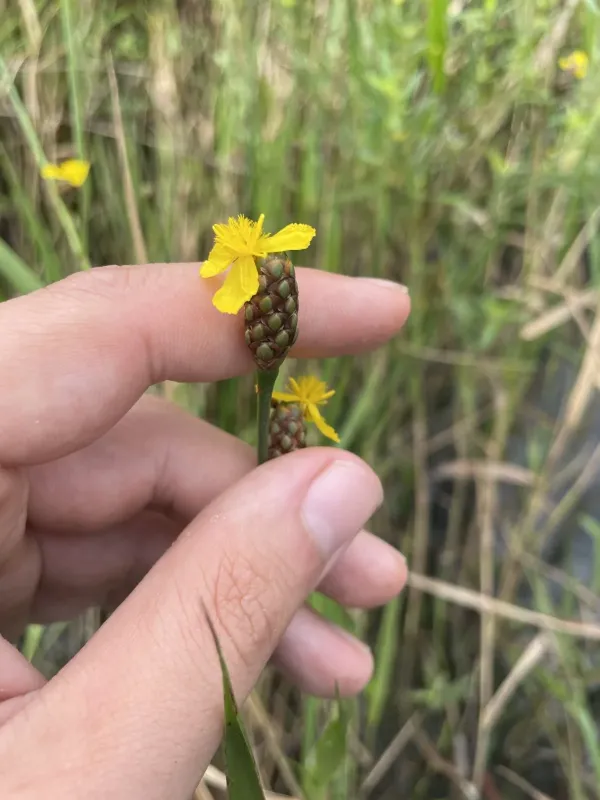
Botanically, the plant is characterized by distinct sword-shaped leaves arranged in a basal rosette and long, slender scapes. At the apex of each scape sits a dense, cone-like inflorescence covered in stiff scales, from which yellow three-petaled flowers emerge intermittently.
Climate requirements involve warm temperatures coupled with high air humidity. The crop is extremely sensitive to desiccation, therefore successful cultivation requires maintaining a constant water level that covers the root zone or ensuring the substrate remains perpetually saturated.
In terms of agricultural and horticultural use, Xyris smalliana is primarily viewed as a decorative element for landscapes, artificial ponds, and natural biofiltration systems. It is valued for its unique structural appearance and its ability to stabilize the banks of saturated ground areas.
Main diseases and pests
The primary threats to the crop include disruptions to the water regime, particularly rapid drying of the substrate, which leads to the quick death of the root system and plant collapse.
In indoor or greenhouse conditions, the plant may be susceptible to aphids or spider mites if air humidity is insufficient. Furthermore, fungal infections may occur during periods of water stagnation that lack proper aeration, especially when combined with high ambient temperatures.