
Xyris serotina
Xyris serotina
Description
Growing requirements
Xyris serotina, commonly known as a type of yellow-eyed grass, is a perennial herbaceous plant belonging to the Xyridaceae family. This species is primarily recognized for its preference for wetland habitats, where it thrives in saturated soils and distinct acidic environments common in native pine savannas and pond edges.
Native to North America, the plant is adapted to regions with mild winters and high annual rainfall. Its natural range includes damp, sandy sites where the water table remains close to the surface, making it an excellent candidate for specialized ecological restoration projects and water garden designs.
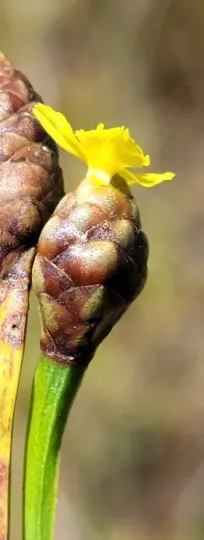
Botanically, Xyris serotina is characterized by basal rosettes of linear, grass-like leaves and sturdy, leafless stalks that support terminal spikes. These spikes develop distinct yellow flowers that open sequentially, providing a prolonged flowering period that adds significant visual interest to wetland landscapes during the late summer months.
In terms of cultivation, the plant demands consistently moist, acidic, and sandy soil conditions. It does not tolerate prolonged drought or alkaline soil environments, which can lead to rapid decline. Providing the correct soil pH and ensuring a constant water supply are the primary requirements for successful establishment.
The main agricultural and horticultural use of Xyris serotina is in the creation of sustainable rain gardens and the ecological stabilization of pond perimeters. Its ability to tolerate low-nutrient, high-moisture soils makes it a valuable asset for maintaining biodiversity in managed wet meadow environments.
Main diseases and pests
Fungal diseases are the primary threat to Xyris populations, particularly when aeration is poor. Root rots often occur if the substrate becomes anaerobic or excessively stagnant, necessitating proper drainage design even within water-loving plant communities.
Insect pests, such as leaf-feeding larvae, can occasionally damage the foliage, reducing both the aesthetic appeal and the photosynthetic capacity of the plant. Monitoring and early intervention with biological controls are recommended to maintain plant health throughout the growing season.
Competition from aggressive weeds is a significant challenge during the early establishment phase. Because Xyris serotina has a relatively moderate growth rate, consistent site management and manual weeding are essential to prevent surrounding vegetation from outcompeting the crop for sunlight and nutrients.
Nutrient deficiency, particularly regarding micronutrients in highly leached sandy soils, may require specific acidic fertilization. Applying organic mulch or slow-release acidic fertilizers helps improve soil structure and supports the metabolic needs of the plant during peak growth periods.
Environmental stressors, such as drastic fluctuations in water levels, can negatively impact flower spike development. Maintaining a stable hydroperiod is critical, as extreme drought stress can cause the plant to enter dormancy prematurely or die, particularly in younger, less established specimens.