
Rough-leaved yellow-eyed grass
Xyris scabrifolia
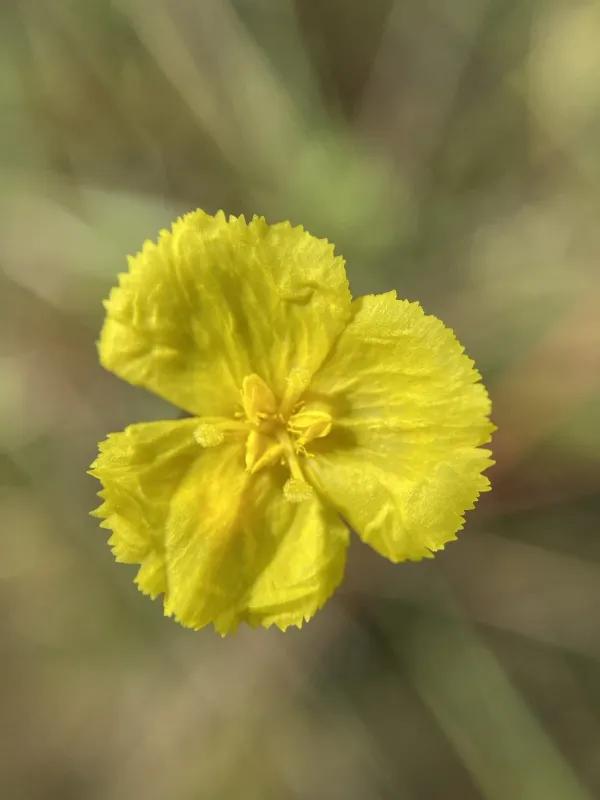
Description
Growing requirements
Xyris scabrifolia, commonly known as rough-leaved yellow-eyed grass, belongs to the Xyridaceae family. It is a perennial herbaceous plant specialized for survival in saturated, bog-like environments where competition from other plant species is often limited.
The plant is native to specific wetland habitats in the southeastern United States. It naturally thrives in acidic, nutrient-poor, and poorly drained soils, often acting as an indicator species for specific hydrological conditions in marshlands and wet savannas.
Ecologically, the plant demands high moisture levels and consistent exposure to light. It is sensitive to soil drainage; if the substrate becomes too dry, the plant's metabolic activity and structural integrity significantly decline. It is not traditionally farmed for agricultural output.
Botanically, it is characterized by its narrow, linear leaves that exhibit a distinct rough texture. The inflorescence consists of a dense, cone-like spike that elevates yellow flowers above the foliage, which is a diagnostic feature used in field identification.
In terms of human use, the species is primarily appreciated in specialized landscaping and environmental restoration projects focused on wetland habitat creation. There is no commercial agricultural scale production, as its growth cycle is strictly tied to fragile wetland ecosystems.