
Yellow-eyed grass
Xyris platylepis
Description
Growing requirements
Xyris platylepis, commonly known as a type of yellow-eyed grass, is a member of the Xyridaceae family. It is a perennial herbaceous plant adapted to thrive in wetland environments, including bogs, swamps, and the saturated margins of natural water bodies.
Native to the southeastern regions of North America, this plant is well-adapted to acidic, sandy, or peaty soils that remain permanently wet. Its distribution is closely linked to its ability to survive in environments where most typical garden plants would succumb to root oxygen deprivation.
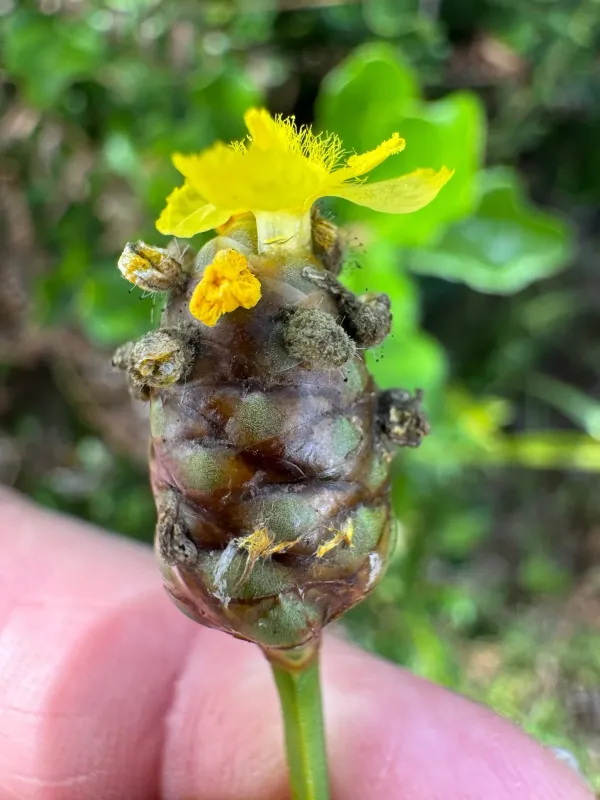
Botanically, Xyris platylepis is characterized by dense tufts of rigid, ensiform leaves arranged in a basal rosette. During the growing season, it produces slender, leafless scapes topped with distinctive, cone-like inflorescences featuring small but striking yellow flowers.
Cultivation requirements focus heavily on hydration and lighting. To ensure healthy growth, the soil must be kept constantly moist or even submerged in shallow water. It thrives best in full sun, as limited light intensity negatively affects its flowering performance.
In terms of agricultural and horticultural use, it is prized as a specialized plant for water gardens and wetland restoration projects. It is an excellent choice for stabilizing pond edges and contributing to the biodiversity of moist, sun-exposed landscapes.
Main diseases and pests
The primary threats to healthy populations of Xyris platylepis are fungal diseases associated with stagnant water conditions combined with poor airflow. If the water quality declines or organic matter begins to rot, root health can be compromised quickly.
Pest issues are generally minimal for this plant. However, during greenhouse propagation or in crowded nursery conditions, growers may observe occasional infestations of aphids or spider mites. Maintaining adequate light and ensuring the plant is not overcrowded are the best preventative measures.