
Northern yellow-eyed grass
Xyris montana
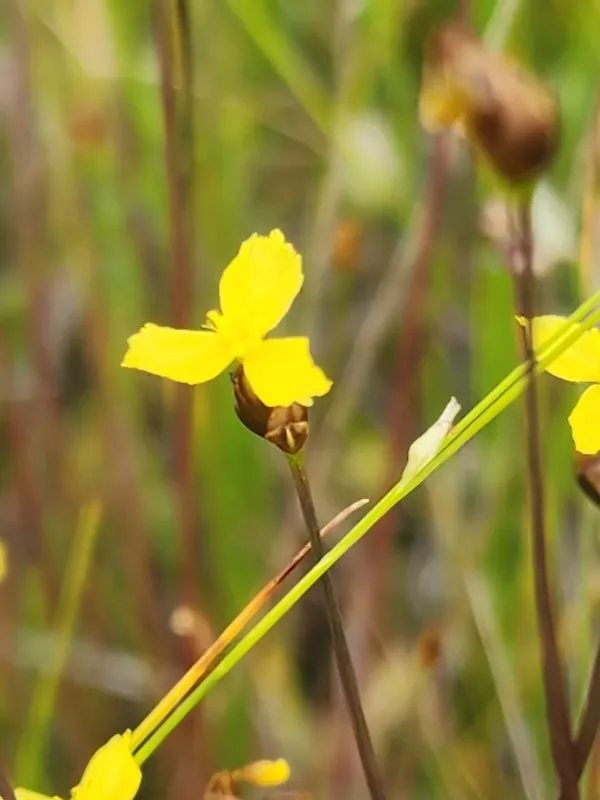
Description
Growing requirements
Northern yellow-eyed grass (Xyris montana) is a member of the Xyridaceae family. This perennial herb is naturally found in acidic bogs, peatlands, and wet, nutrient-poor environments across parts of North America.
Botanically, the plant features grass-like leaves forming a basal rosette and distinctive terminal spikes containing small, yellow flowers. It is uniquely adapted to thrive in acidic wetland niches where competition from other species is often limited.
Successful cultivation requires mimicry of its native bog-like habitat. The soil must remain consistently moist to saturated throughout the growing season, as the plant lacks effective drought-tolerance mechanisms.
The ideal growing medium is composed of acidic peat mixed with sand. Fertilizer use should be avoided, as the species is sensitive to chemical nutrients and prefers the oligotrophic conditions found in natural sphagnum bogs.
Exposure to full sunlight is essential for the healthy development of Xyris montana. While it prefers cool, humid climates, it is quite hardy, provided that the hydrological balance of the planting site is strictly maintained.