
Xyris melanocephala
Xyris melanocephala
Description
Growing requirements
Xyris melanocephala belongs to the Xyridaceae family. This perennial herb is native to specific wetland habitats in South America, where it thrives in highly acidic, nutrient-poor soil conditions.
The plant is typically found in boggy environments and sandy wetlands. Its natural range encompasses tropical and sub-tropical regions, often reaching into higher altitudes where it adapts to unique thermal fluctuations.
Cultivation requires extreme attention to soil acidity and moisture levels. The substrate must remain waterlogged or consistently damp to mimic the natural hydrological environment of its native habitat.
Regarding light, this species requires full sun exposure. It is not adapted to shaded environments and will fail to bloom if sunlight is significantly obstructed by other vegetation.
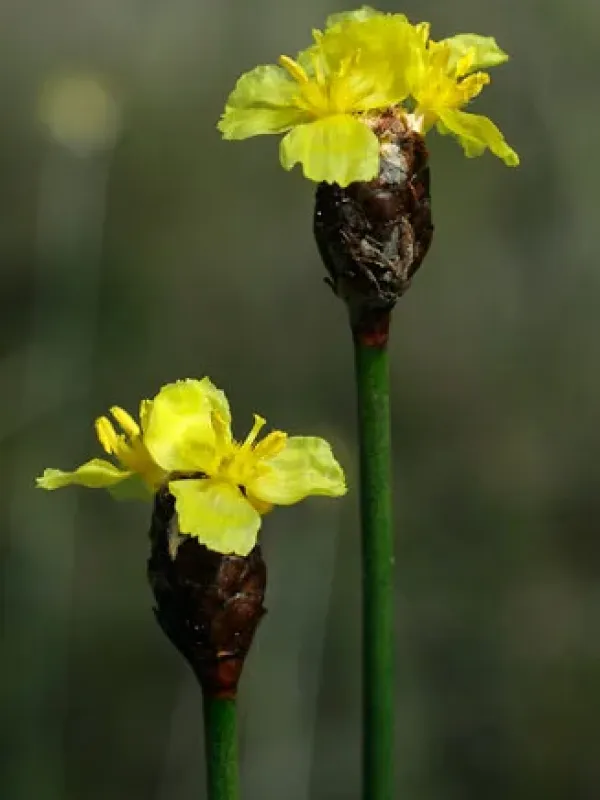
Botanically, it is characterized by its distinct dark, cone-like inflorescence and narrow, grass-like leaves that form a basal rosette, allowing it to withstand high-wind and high-moisture conditions.
Main diseases and pests
Xyris melanocephala is rarely affected by common agricultural pests. Its tissue composition acts as a natural deterrent against many herbivores found in wetland environments.
The primary threat to this plant is habitat alteration. Drainage of wetlands or significant changes in water quality can lead to the rapid decline of the species.
Fungal pathogens may emerge if the plant is grown in conditions with poor drainage that result in stagnant water combined with lack of airflow. Proper spacing is essential to mitigate this risk.
Competition from more aggressive, fast-growing aquatic or semi-aquatic weeds poses a consistent threat in a managed cultivation setting.
Disease management focuses on preventive strategies, such as soil acidity testing and monitoring water levels, rather than chemical intervention, which could harm the sensitive root system.