
Xyris longisepala
Xyris longisepala
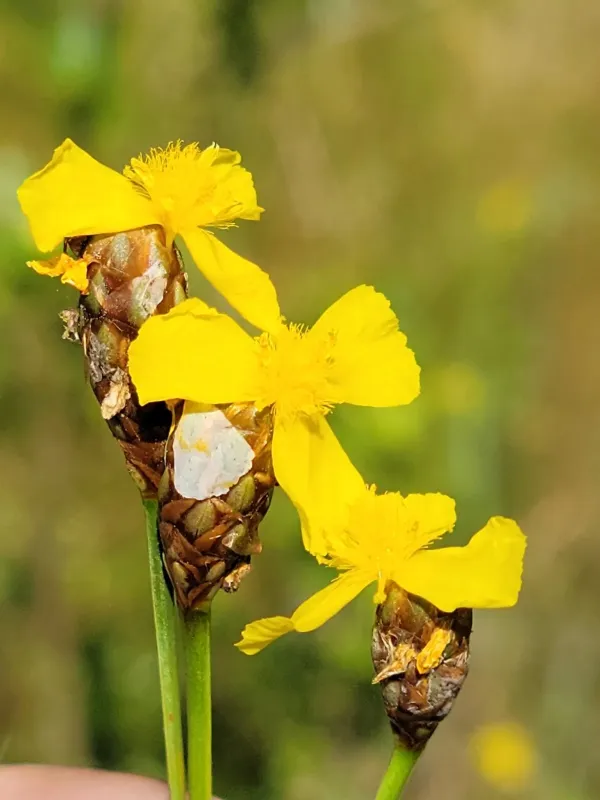
Description
Growing requirements
Xyris longisepala is a perennial herb belonging to the Xyridaceae family. This unique plant is native to wetland environments, often found in tropical and subtropical regions where soils are acidic, waterlogged, and nutrient-poor.
Botanically, it is characterized by its tufted, grass-like leaves that emerge from a basal rosette. The plant produces distinctive cone-shaped flower spikes on elongated peduncles, which display small, delicate flowers, making it a point of interest for botanical researchers and gardeners alike.
The habitat requirements for Xyris longisepala are quite specific due to its evolutionary adaptation to swampy terrains. It thrives best in saturated, peaty, or sandy soils where the water table is consistent throughout the year, ensuring the root system remains constantly hydrated.
As a light-demanding species, this plant requires exposure to full sun to maintain healthy growth and to support the maturation of its flowering spikes. It is not suitable for shaded environments, as inadequate light levels will inhibit its reproductive capacity and decrease overall vitality.
The primary horticultural use of Xyris longisepala is found in specialized landscaping, specifically for the creation of bog gardens or the naturalistic design of pond edges. It serves as an excellent specimen for restoration projects focused on re-establishing native wetland flora.