
Xyris juncea
Xyris juncea
Description
Growing requirements
Xyris juncea, commonly known as a type of yellow-eyed grass, belongs to the Xyridaceae family. This perennial herbaceous plant is specialized for survival in saturated, wetland environments, making it a unique candidate for specific ecological niches.
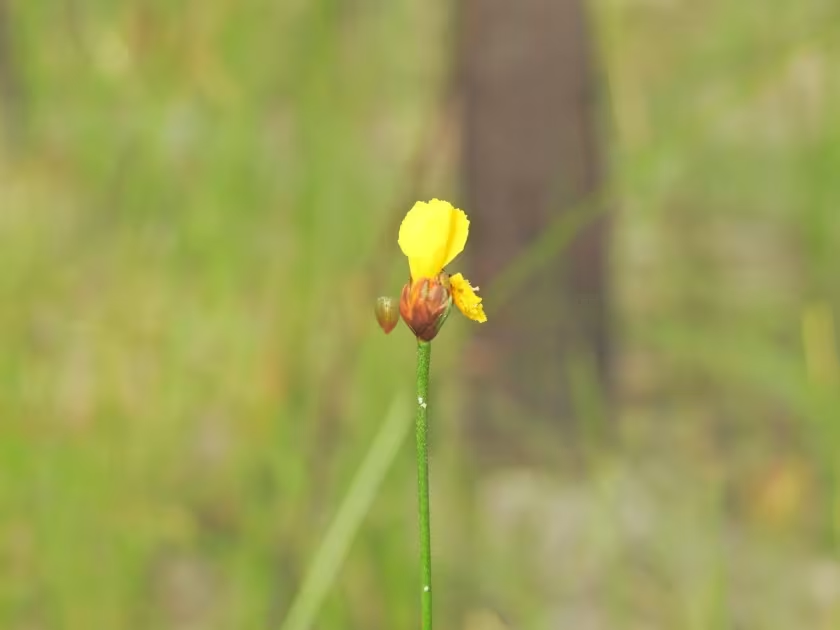
The plant is defined by its slender, rush-like leaves that emerge from a dense basal rosette. The inflorescence consists of small, distinct yellow flowers clustered within a cone-like spike at the end of a long, rigid scape, which is a key morphological identifier for the species.
For successful cultivation, Xyris juncea requires acidic, nutrient-poor, yet consistently wet soil conditions. It is highly intolerant of drought, demanding that the root zone remains waterlogged throughout the entire growing season to maintain physiological functions.
Native primarily to the coastal plains of North America, the plant is well-adapted to high sun exposure and warm climates. It thrives in open, boggy meadows where competitive pressure from faster-growing vegetation is often limited by the water saturation levels.
In terms of agricultural and horticultural utility, Xyris juncea is primarily used in ecological restoration projects for wetland rehabilitation. It is also valued by specialized gardeners for its role in ornamental bog garden design, providing structural diversity and unique seasonal blooms.