
Indian yellow-eyed grass
Xyris indica
Description
Growing requirements
Indian yellow-eyed grass (Xyris indica) is a herbaceous perennial plant belonging to the Xyridaceae family. The plant is characterized by its grass-like appearance, forming dense clusters of stiff, linear basal leaves. It is native to the tropical and subtropical regions of Asia, primarily found in countries like India, Thailand, and Indonesia.
This species thrives in wet environments such as swamps, marshes, riverbanks, and inundated rice fields. Xyris indica is perfectly adapted to waterlogged soils that remain saturated for most of the year. Its ability to tolerate low oxygen levels in the substrate gives it a competitive advantage in aquatic habitats.
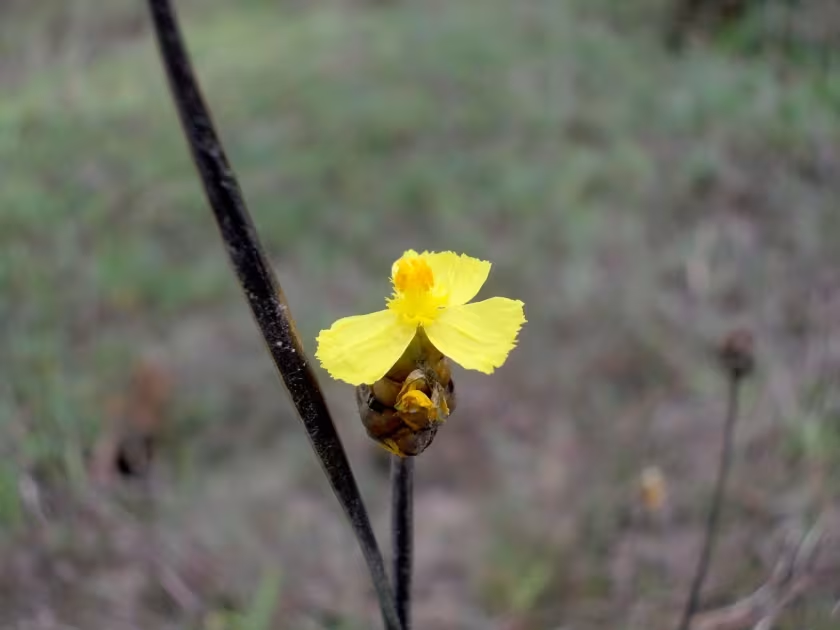
Botanically, the plant is distinguished by its unique inflorescence, which consists of small yellow flowers grouped into a dense, cone-like terminal spike. These spikes are supported by long, slender, leafless scapes that emerge from the center of the leafy rosette. Flowering is highly dependent on humidity levels and tropical photoperiods.
To cultivate Xyris indica successfully, one must replicate its natural habitat conditions. High atmospheric humidity and consistent soil moisture are essential. The plant requires significant sunlight to promote robust growth and typically flourishes in temperatures ranging from 25°C to 32°C.
In terms of agricultural and traditional usage, the plant is valued more for its medicinal properties in local ethno-botanical practices than for large-scale industrial cultivation. Extracts from the leaves are sometimes used to treat skin ailments, and the plant serves as a biological indicator for the moisture profile of specific tropical soils.
Main diseases and pests
The primary threats to Xyris indica involve fungal pathogens that target the root system, particularly when water becomes stagnant and poorly oxygenated for extended periods. Root rot caused by species of Pythium or similar water-borne fungi can severely compromise the plant's vitality.
While the plant is generally hardy, it can be susceptible to various insect pests that feed on foliage during the dry season. However, the leaves' high fibrous and silica content acts as a natural deterrent, making it less appealing to many common agricultural pests compared to softer grass varieties.