
Elliott's yelloweyed grass
Xyris elliottii
Description
Growing requirements
Elliott's yelloweyed grass (Xyris elliottii) is a perennial herbaceous plant belonging to the Xyridaceae family. It is specifically adapted to wet, nutrient-poor environments, making it a unique candidate for specialized horticultural projects and wetland restorations.
The native range of this species is primarily the southeastern United States. It is typically found in pine flatwoods, savannas, and low-lying, wet sandy areas where moisture availability is high throughout the year, reflecting its evolutionary preference for hydric soil conditions.
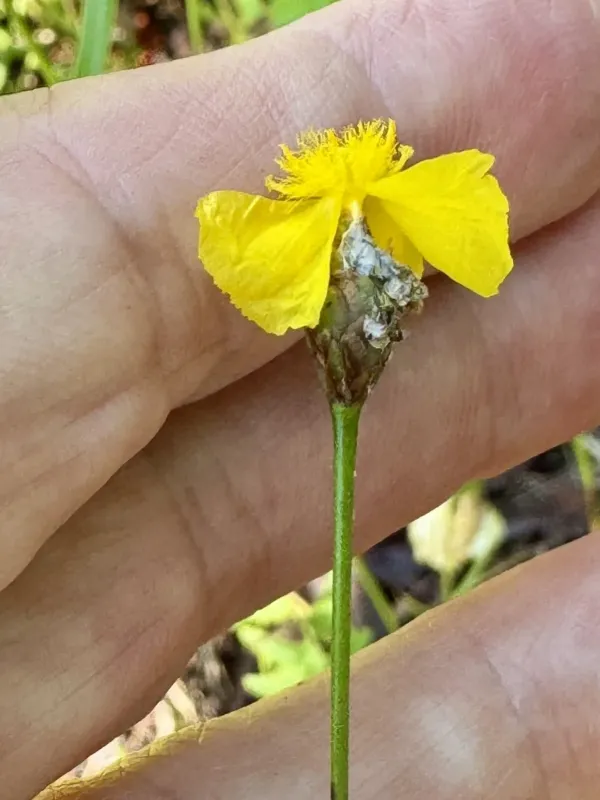
Botanically, the plant is distinguished by its grass-like, linear leaves that form a basal rosette. The most notable features are the stiff, upright scapes that terminate in compact, ovoid to subglobose spikes with showy yellow flowers that typically open during the morning hours.
Successful cultivation of this species requires constant moisture. In an agricultural or landscaping setting, it should be placed in full sun to ensure healthy development. The soil substrate must be consistently moist or even saturated, mimicking the conditions of its native seepage bogs.
The primary use of Xyris elliottii is in ornamental wetland and water gardening. It serves as an excellent structural plant for the edges of ponds or naturalistic bog gardens, providing both aesthetic value with its yellow blooms and ecological utility by stabilizing wet soil.
Main diseases and pests
Elliott's yelloweyed grass is generally robust and free from serious disease outbreaks when grown in its appropriate ecological niche. The main threat is the sudden loss of soil saturation or prolonged drought, which quickly leads to desiccation and plant death.
In terms of pests, it is rarely bothered by major agricultural insects. However, in garden settings, herbivores such as slugs and snails may occasionally feed on the tender foliage. Maintaining appropriate plant spacing and avoiding excessive mulch can help reduce potential pest pressure.