
Drummond's yellow-eyed grass
Xyris drummondii
Description
Growing requirements
Drummond's yellow-eyed grass (Xyris drummondii) is a perennial herbaceous plant belonging to the Xyridaceae family. This species is native to specific wetland habitats in North America, thriving in saturated soil conditions where it displays unique adaptive strategies.
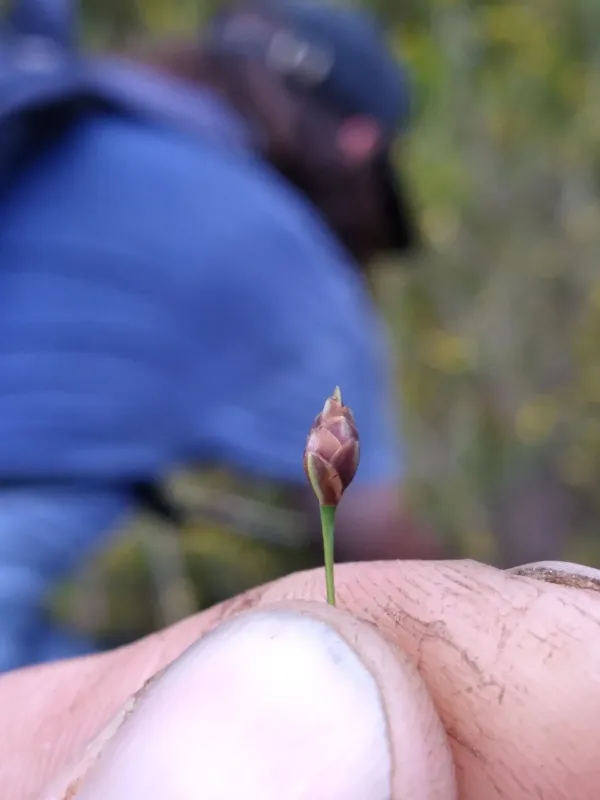
Botanically, the plant features narrow, grass-like leaves forming basal rosettes. Its most notable feature is the presence of dense, head-like inflorescences supported by long, sturdy, leafless stalks, which provide a distinct aesthetic in its natural coastal or marshy environment.
The cultivation of this species requires strict adherence to moisture requirements. It performs best in acidic, damp substrates that mimic its natural boggy habitat. Sufficient sunlight is essential for the plant to develop its characteristic inflorescences and maintain vigorous growth.
In terms of agricultural and horticultural use, the plant is valued for its role in wetland restoration and as a specialized ornamental for water garden margins. It serves as a natural component in ecological landscape management, especially in areas with consistently high water tables.
Agronomic management involves maintaining constant soil moisture and ensuring the acidity of the growing medium remains within the optimal range. It is generally a low-maintenance species, provided that the ecological conditions match its specific environmental preferences.
Main diseases and pests
Potential threats to the crop include root rot pathogens that can thrive if soil oxygen levels are compromised. Additionally, various wetland-associated pests can cause damage to the foliage, necessitating proactive management and environmental monitoring during the active growth period.