
Woolly willow
Salix lanata L.
Description
Growing requirements
The woolly willow (Salix lanata) belongs to the Salicaceae family and is recognized as one of the most attractive dwarf willow species. Native to northern regions including Iceland, Scandinavia, and the Russian Arctic, it is a hardy, deciduous shrub perfectly adapted to extreme cold and windy environments.
Regarding climate, the plant thrives in cool, humid conditions typical of arctic and subarctic regions. It is highly resistant to frost and snow cover, making it an excellent choice for northern rock gardens, alpine landscapes, or cold-climate ornamental planting schemes.
Soil requirements for the woolly willow include well-draining, moisture-retentive, and slightly acidic to neutral substrates. While the plant can tolerate poor soils in the wild, in a garden setting, it benefits from a mixture of compost and coarse sand to ensure oxygen reaches the root zone.
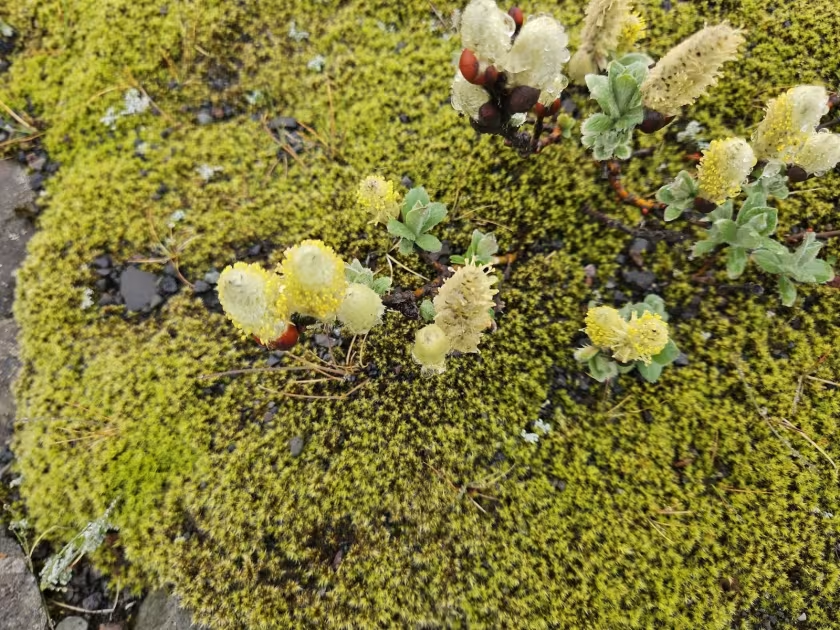
Botanically, it is defined by its silver-grey, woolly hairs covering the leaves and young shoots, which serve as an adaptation to retain moisture and protect against wind-chill. The shrub usually forms a low, rounded shape, rarely exceeding one meter in height, which makes it ideal for confined spaces.
Its primary horticultural use is aesthetic, as the plant is prized for its soft, silvery foliage and prominent catkins that appear in spring. It adds a unique texture to landscaping and is frequently used to accent stone features or water-side garden borders due to its preference for damp soil.
Main diseases and pests
Typical threats include fungal infections such as willow scab and rust, which tend to proliferate in stagnant, high-humidity environments. Ensuring adequate air circulation by spacing plants appropriately is the most effective cultural method to prevent these diseases.
Pests like willow leaf beetles and spider mites can infest the foliage, particularly during dry spells in summer. Integrated pest management, involving manual removal or targeted organic insecticidal treatments, is recommended if an infestation is detected.
Root rot is a potential risk if the soil remains waterlogged for extended periods without proper drainage. Gardeners should ensure the planting site allows excess moisture to dissipate to maintain root health throughout the growing season.
Winter damage from small mammals or mechanical stress due to heavy, wet snowfall can occasionally affect the branch structure. Protecting the plant with temporary fencing or support during severe weather events can preserve its structural integrity.
Despite these vulnerabilities, the woolly willow is generally a low-maintenance plant that exhibits strong vigor. Consistent but moderate care, including periodic mulching and monitoring, ensures the shrub remains healthy and visually appealing year after year.