
Bay willow
Salix pentandra L.
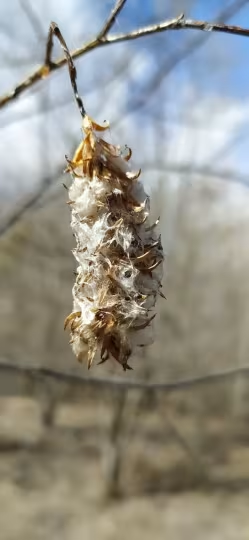
Description
Sowing dates
The propagation of Bay willow (Salix pentandra) is primarily achieved through cuttings. Hardwood cuttings, typically 20 to 30 centimeters in length, are prepared during the winter dormancy and planted in early spring before the buds begin to open.
When selecting cuttings, it is crucial to ensure they have at least 3 to 5 healthy nodes. Proper moisture content in the soil is essential during the initial weeks to facilitate the development of a robust root system.
For seed propagation, sowing should occur immediately after seed maturity, as they lose their viability very quickly. Seeds are spread over a moist, well-draining substrate under controlled conditions to ensure success.
Planting density is adjusted based on the intended use of the willow. For high-quality wicker production, spacing is often kept narrower to encourage vertical growth and limit side branching.
Establishing the plantation requires careful site preparation, including weed control. Once the cuttings are rooted, the species shows vigorous growth, often adapting quickly to its permanent environment.
Growing requirements
Bay willow is a member of the Salicaceae family, recognized for its preference for moisture-rich environments. It is frequently found naturally along the margins of rivers, marshes, and lakes, where it thrives in hydric soils.
This species requires full sun exposure to reach its maximum productive potential. While it can tolerate partial shade, insufficient light often results in elongated, weak stems that are less useful for industrial applications.
The ideal soil for Salix pentandra is a nutrient-rich loam, though it displays remarkable tolerance for various soil types, including slightly acidic or sandy conditions. It performs exceptionally well in water-logged areas where other crops fail.
Climate-wise, the Bay willow is highly hardy, capable of surviving severe frost and extreme cold. It is well-suited for northern and temperate regions where the growing season is short but moisture is abundant.
Minimal soil maintenance is required after the first year, as the tree’s deep root system helps it access nutrients and water effectively, contributing to its role as an effective soil stabilizer.
Yield
The primary economic output of this culture is its flexible and durable wood. It is highly valued in traditional basketry and weaving industries for the superior quality of the harvested shoots.
In managed plantations, the harvesting of shoots is typically carried out using a coppicing technique. Cutting the plant close to the ground encourages the growth of numerous straight, uniform shoots, increasing biomass yield.
The species also serves as a critical nectar source for pollinators, particularly bees, in early spring. This makes Bay willow plantations valuable for enhancing the ecological sustainability of surrounding agricultural lands.
Beyond traditional crafts, the biomass can be harvested for industrial pulp production or converted into renewable energy sources, given its fast growth rate and high carbon-sequestering capacity.
Maximum yield potential is achieved through systematic annual or biennial harvesting. This keeps the stool healthy and productive over many years, ensuring a consistent supply of raw materials.
Main diseases and pests
Rust diseases (Melampsora spp.) represent a common threat to the leaves, particularly in damp and stagnant air conditions. Management involves removing infected plant parts and ensuring proper airflow through the canopy.
Powdery mildew can also affect the foliage, especially during warm, humid periods. Preventive measures include choosing well-ventilated planting sites and avoiding overly dense canopy structures that trap moisture.
Leaf-feeding insects, such as willow beetles, can cause significant damage to the plant if left unchecked. Integrated pest management strategies, including biological controls or targeted insecticidal applications, are recommended.
Small mammals, including voles and rabbits, may gnaw on the bark during winter, potentially girdling and killing young trees. Protecting the base of the stems with tree guards is an essential protective measure.
Maintaining high plant vigor through proper site selection and soil fertility management remains the most effective defense against the majority of diseases and insect pests associated with the willow genus.