
Black willow
Salix nigra Marshall
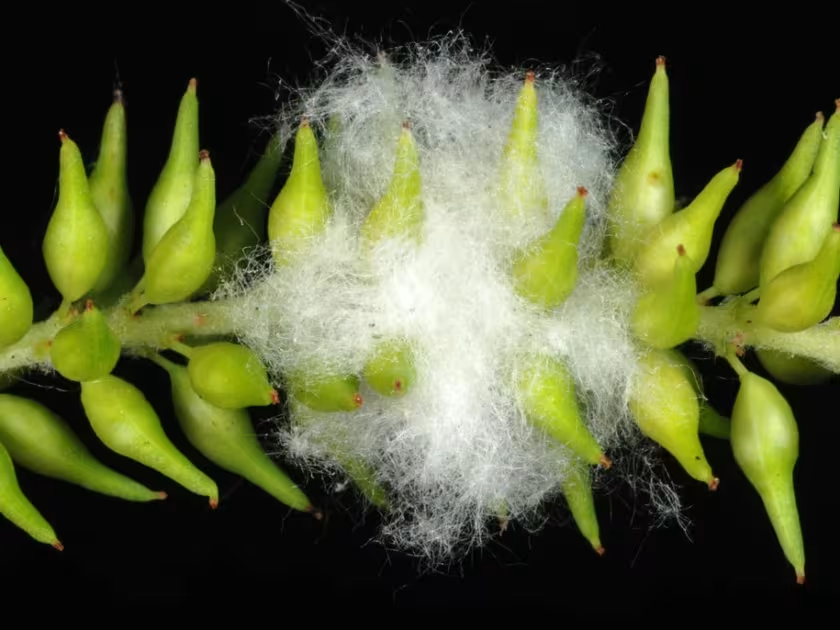
Description
Growing requirements
The Black willow (Salix nigra) is a prominent member of the Salicaceae family, recognized as the largest and most important willow species native to North America.
The species is strictly tied to moist environments. It flourishes in alluvial soils along riverbanks, floodplains, and near water bodies, where it can access constant moisture.
Optimal growth requires a warm climate with a long growing season. While the species is highly light-demanding, it demonstrates adaptability to varying moisture levels as long as water availability is not interrupted.
The ideal soil for this crop should be fertile and exhibit a slightly acidic to neutral pH level. Extremely dry or alkaline soils should be avoided to prevent stunted development.
Agrotechnical management includes selecting sites with high water tables, as the tree relies on its expansive root system for stability and nutrient uptake in wetland conditions.
Yield
Black willow is highly valued for its rapid biomass production, making it a sustainable choice for short-rotation coppice forestry aimed at energy production.
The wood of the Black willow is relatively lightweight, soft, and possesses exceptional shock resistance. These properties make it highly desirable for furniture manufacturing and high-end wood products.
It is specifically noted for its use in creating sports equipment, such as cricket bats, due to its ability to withstand significant physical impact without brittle failure.
In the energy sector, the high calorific value of its biomass makes it an excellent source for wood chips, pellets, and other biofuels intended for industrial heating.
Beyond wood production, the species plays a critical role in ecological agriculture by mitigating soil erosion through its dense, deep root network along riparian zones.
Main diseases and pests
Black willow is susceptible to several insect pests, including the willow leaf beetle and various borers that can damage the internal structure of the trunk and branches.
Fungal pathogens such as rust and black canker are common threats, especially in areas with poor air circulation or prolonged periods of leaf moisture during the spring.
Integrated pest management strategies involve selecting resistant clones and ensuring proper spacing between trees to prevent the microclimate from becoming overly humid.
Young plantations are vulnerable to rodent damage, which requires protective measures for the stems until the bark becomes sufficiently thick and hardened.
Regular monitoring for early signs of disease and insect activity is essential for maintaining high yield quality and ensuring the long-term health of the willow plantation.