
Grey willow
Salix cinerea L.
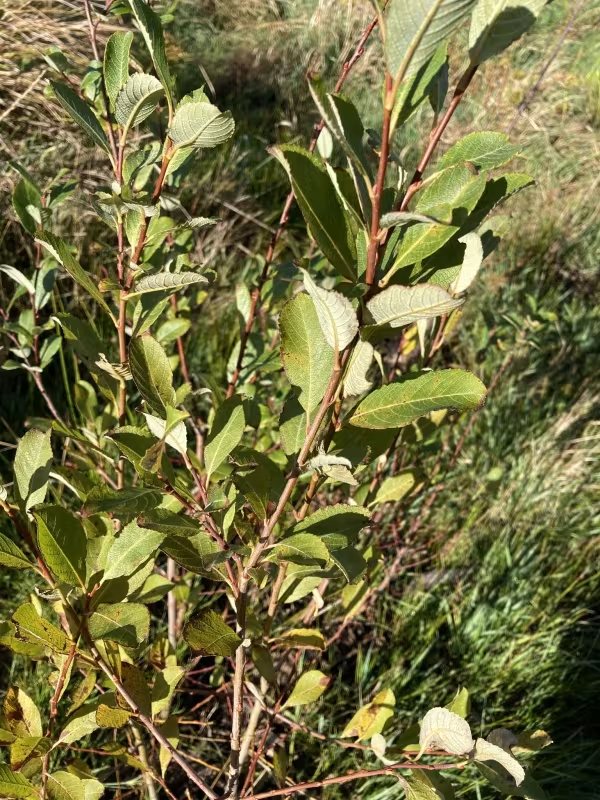
Description
Sowing dates
Propagation of Salix cinerea is primarily achieved through hardwood cuttings, which are harvested during the plant's winter dormancy period.
The cuttings should be planted in early spring, before the buds start to swell, to ensure that the root system develops successfully before the summer heat.
Planting depths of 20 to 25 centimeters are standard to promote deep rooting and stability, with sufficient spacing for maintenance access.
While sexual reproduction via seeds is biologically possible, it is not practical for agricultural purposes due to the seeds' extremely short viability period.
Proper soil preparation, including weed control and moisture management, is essential for the high success rate of newly established willow plantations.
Growing requirements
The grey willow is a member of the Salicaceae family, well-known for its high water requirements and preference for wet, boggy, or riparian habitats.
This species thrives in direct sunlight and should be planted in open, unshaded areas to achieve maximum biomass production and healthy shoot development.
It adapts well to various soil types, ranging from peat-rich substrates to heavy clays, provided there is constant access to moisture in the soil.
Grey willow is highly cold-hardy, making it a reliable crop for temperate regions where frost and low winter temperatures are common factors.
Agricultural management should focus on maintaining high soil moisture levels and periodic weeding during the establishment phase of the crop.
Yield
The primary economic use for Salix cinerea is the production of high-quality wicker for basketry, furniture making, and traditional weaving crafts.
In recent years, it has gained importance as a fast-growing biomass crop, utilized for the production of renewable energy and wood chips.
The species serves as an critical early-season pollen and nectar source for honeybees, significantly contributing to local pollinator health.
Environmental benefits include soil stabilization and erosion control, making the grey willow an excellent choice for wetland restoration projects.
Sustainable harvesting of shoots allows the plantation to remain productive for several decades, providing a continuous supply of raw material.
Main diseases and pests
The grey willow can be affected by various fungal diseases, such as leaf rust, which often occur in humid environments with poor air circulation.
Insect pests, including willow leaf beetles, pose a recurring challenge by damaging foliage and reducing the photosynthetic capacity of the plants.
Small mammals and rodents may cause mechanical damage to the bark during harsh winters, potentially weakening the plant structure.
Integrated pest management, including pruning affected branches and maintaining proper plantation density, is the most effective way to control threats.
Chemical intervention is rarely necessary and should be reserved for severe infestations to maintain the ecological integrity of the plantation.