
Babylon willow
Salix babylonica L.
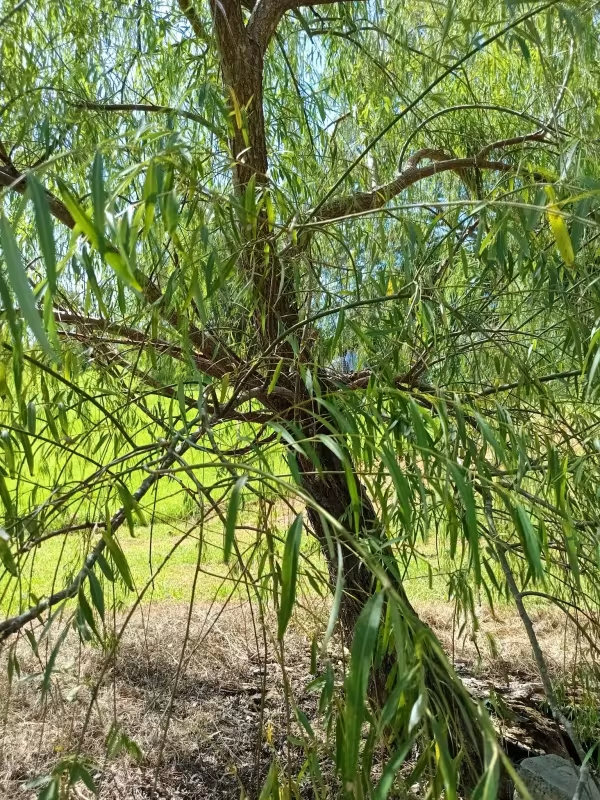
Description
Growing requirements
The Babylon willow (Salix babylonica L.) belongs to the Salicaceae family. It is a deciduous tree widely recognized for its pendulous branches and graceful, drooping foliage, which creates a distinct weeping effect in both parks and private landscapes.
Originating from China, this species has been introduced to various parts of the world. It is highly adapted to riparian environments, showing a strong preference for damp, moisture-rich soils near ponds, rivers, or lakes where the root system can thrive.
In terms of site requirements, the tree demands full sun exposure to maintain its healthy growth and characteristic shape. While it can handle periodic flooding, it is sensitive to drought, necessitating consistent irrigation if planted away from natural water sources.
The ideal soil for this species is deep, fertile, and slightly moist. It performs well in various soil types, ranging from sandy loams to heavier clays, provided that the soil structure allows for adequate aeration and does not become excessively waterlogged for long periods.
Economically, the Babylon willow is primarily valued for its ornamental appeal and its function in bioengineering for erosion control along watercourses. Furthermore, its pliable branches are historically and currently used in basketry and the production of artisanal wickerwork.
Main diseases and pests
Common pests affecting this species include the willow leaf beetle and various species of aphids that feed on the sap of young stems. In cases of severe infestation, the foliage may show significant yellowing and premature leaf drop.
Fungal diseases, particularly willow scab (Venturia saliciperda) and various forms of leaf rust, pose a significant risk during wet spring seasons. Proper air circulation and the removal of infected plant debris are essential management practices for tree health.