
Smith's Willow
Salix smithiana Willd.
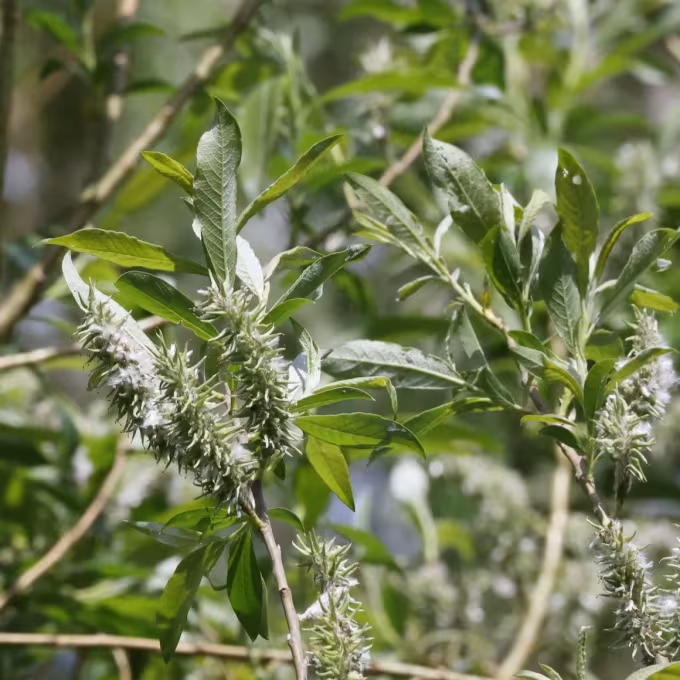
Description
Growing requirements
Smith's Willow (Salix smithiana) is a prominent hybrid willow belonging to the Salicaceae family. It is a cross between Salix viminalis and Salix caprea, possessing the vigor and hardiness of both parent species.
The plant thrives in moist, fertile soils, preferring alluvial areas where moisture is consistently available. It is well-known for its ability to tolerate heavy soils and high water tables, making it an excellent candidate for land reclamation.
Exposure to full sunlight is essential for optimal development. While it can survive partial shade, its growth rate and biomass quality significantly improve under direct exposure to solar radiation.
Site preparation involves deep ploughing and thorough weed control, particularly during the establishment year. The rooting of cuttings is most successful in loose, aerated soils with good drainage.
Fertilization regimes should prioritize nitrogen in the early stages to encourage rapid shoot development. Once established, the culture is quite self-sufficient, though supplemental irrigation during severe droughts is beneficial.
Yield
Smith's Willow is primarily cultivated for high-quality basketry rods and increasingly for short-rotation coppice (SRC) forestry, which serves as a renewable source for bioenergy.
The biomass yield is substantial, often reaching 10 to 15 tons of dry matter per hectare annually. This high productivity makes it a cornerstone of sustainable energy farming in many temperate regions.
For basketry purposes, the harvest is performed annually during the dormant season. This ensures that the shoots are long, flexible, and free of side branches, which is critical for fine weaving.
As an energy crop, the harvest rotation is typically set to every two to three years. This cycle allows for the accumulation of woody mass while maintaining the vitality of the rootstock for future cycles.
Beyond its economic yield, the species provides ecological services by sequestering carbon and acting as a windbreak, significantly contributing to the local microclimate stability.
Main diseases and pests
The primary threats to Salix smithiana include various leaf beetles and gall midges, which feed on foliage and young shoots. These infestations can reduce total photosynthetic capacity.
Fungal pathogens such as rust (Melampsora spp.) represent a major risk, especially in years with high humidity. Proper spacing between plants is the most effective preventative measure against such outbreaks.
Shoot blight and anthracnose can cause dieback, particularly in regions with cold, wet springs. Careful monitoring of the plantation for lesions on the stems is recommended during the early growth phase.
Integrated pest management (IPM) is the best approach to maintain plantation health. This includes selecting resistant cultivars and promoting beneficial insect predators to control aphid populations naturally.
Cultural practices such as clearing debris from the plantation floor and regular pruning help limit the overwintering sites for many pathogens and insect pests.