
Basket willow
Salix viminalis L.
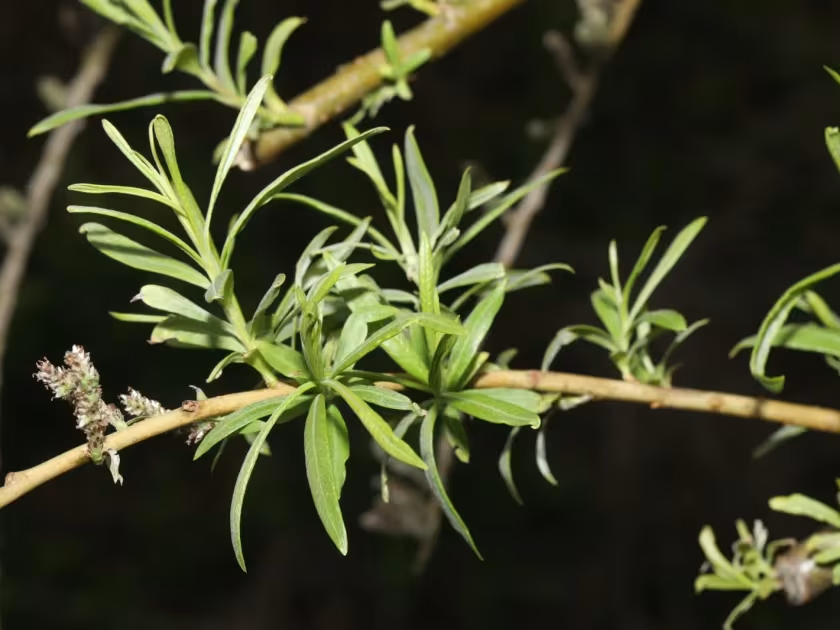
Description
Sowing dates
Basket willow is typically propagated using hardwood cuttings taken from healthy, dormant one-year-old shoots during the winter.
Planting should occur in early spring before bud burst, or in late autumn after the plant has entered dormancy.
Cuttings are usually 20–25 cm long and are inserted vertically into prepared soil, with only a small portion left above the surface.
For high-density basketry crops, standard planting patterns involve spacing between rows of 50–60 cm with 30–40 cm between individual plants.
Proper soil preparation, including deep plowing and weed control, is essential to ensure a high survival rate of the cuttings.
Growing requirements
Basket willow thrives in moist, fertile soils and is commonly found in riparian zones, making it an excellent crop for wetlands.
Full sunlight is mandatory for optimal growth; any shade will significantly reduce the vigor and quality of the produced willow rods.
The species prefers slightly acidic to neutral soil conditions and has a high tolerance for varying soil textures, including heavy loams.
It is a hardy perennial capable of withstanding cold climates, ensuring stable production across different temperate regions.
Water availability is critical during the establishment year to promote deep root systems and vigorous shoot elongation.
Yield
The annual yield of basket willow is highly dependent on plantation age, soil fertility, and the intensity of the agricultural practices applied.
For basketry, yields can reach 10–15 tons of harvested rods per hectare when grown under optimal management conditions.
Energy plantations (short-rotation coppice) can yield upwards of 20 tons of dry biomass per hectare during established harvest cycles.
Regular fertilization and effective weed management are the primary drivers for maximizing biomass output over the plantation's lifespan.
With consistent harvesting, a well-managed willow plantation can remain productive for up to 20 years before requiring replanting.
Main diseases and pests
Key pests include the willow leaf beetle and various moth larvae that can cause significant defoliation and growth stunting.
Fungal diseases like willow rust are common, especially in environments with poor air circulation or prolonged high humidity.
Integrated pest management strategies, such as thinning stands to increase airflow, are recommended over reliance on chemicals.
Sanitation practices, including the removal of infested plant material, are necessary to prevent the spread of pathogens across the farm.
Monitoring the plantation during the active growing season allows for early detection of potential outbreaks and timely intervention.
Harvesting
Harvesting for basketry purposes is strictly conducted during the winter dormancy period after the leaves have naturally fallen.
Winter-harvested rods provide the flexibility and structural integrity required for artisanal weaving and high-quality utility items.
Modern biomass energy production relies on mechanical harvesters that cut and chip the willow stems directly in the field.
Post-harvest management involves sorting the material by grade or diameter to meet specific industrial or craft market requirements.
The coppicing nature of Salix viminalis allows the plant to regenerate rapidly after harvest, ensuring a sustainable cycle of production.