
Woolly butterfly bush
Buddleja marrubiifolia Benth.
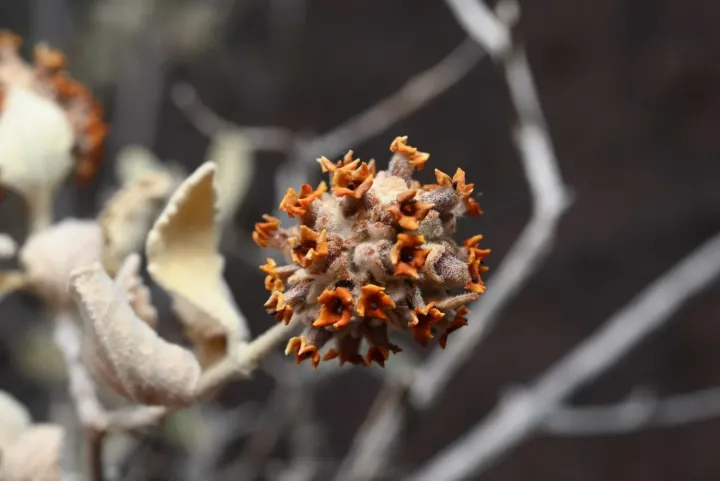
Description
Growing requirements
Buddleja marrubiifolia, known as the woolly butterfly bush, is a perennial shrub in the Scrophulariaceae family, native to the arid regions of the southwestern United States and Mexico. The plant is prized for its high adaptability to rocky soils and semi-desert climates.
This species prefers well-drained, nutrient-poor soils. It is critically intolerant of waterlogged root systems, which can lead to the plant's decay during the winter or rainy autumn months.
For optimal growth, the plant requires a full-sun location. In conditions of insufficient light, the stems become leggy, lose their density, and the bloom cycle becomes less intense and shorter in duration.
The culture is characterized by its high drought tolerance, making it suitable for landscaping in extremely hot and dry climates. A moderately warm temperature range is ideal, as the plant is sensitive to severe, prolonged frosts.
Agricultural management requires moderate watering only during the first years after planting to establish the root system. Once mature, specimens are generally capable of thriving on natural precipitation alone.
Main diseases and pests
The main threats to this species include fungal diseases that flourish in high-humidity conditions. Root rot is the most common cause of plant failure, typically resulting from improper site selection with poor soil drainage.
Common pests include spider mites and aphids, which damage young leaves and stems during hot, dry summers. Control involves timely application of appropriate insecticides or acaricides if infestations occur.
Nematodes can affect the root system in contaminated soil. Prevention focuses on following good horticultural practices and using healthy nursery stock when establishing new plantings.
Overwatering the soil during the autumn can trigger phytophthora, which manifests as rapid wilting and blackening of the stems. Affected parts of the shrub should be immediately removed and disposed of.
To prevent the spread of pests and diseases, it is recommended to regularly inspect the bushes and prune away any dead or damaged branches, thereby ensuring proper airflow and canopy ventilation.
Harvesting
Buddleja marrubiifolia is primarily used in landscaping and ornamental gardening. It is valued for its silvery, woolly foliage, which provides aesthetic interest even when the plant is not in bloom.
The flowering period is marked by the appearance of small, orange to yellow globular flower heads. Seed collection for propagation is performed after the capsules have fully matured and turned brown.
Pruning is a critical aspect of care and should be carried out in early spring. This practice stimulates new growth and helps maintain a compact shrub shape, which is necessary for aesthetic appeal in garden settings.
The plant acts as an excellent nectar source, attracting a large number of pollinators, including butterflies and bees, to the garden. This makes it an important component of ecological or pollinator-friendly gardens.
Despite its ornamental value, the woolly butterfly bush does not require frequent fertilization. Excess nitrogen in the soil can negatively impact cold hardiness and lead to excessive vegetative growth at the expense of flowering.