
Buddleja loricata
Buddleja loricata Leeuwenb.
Description
Growing requirements
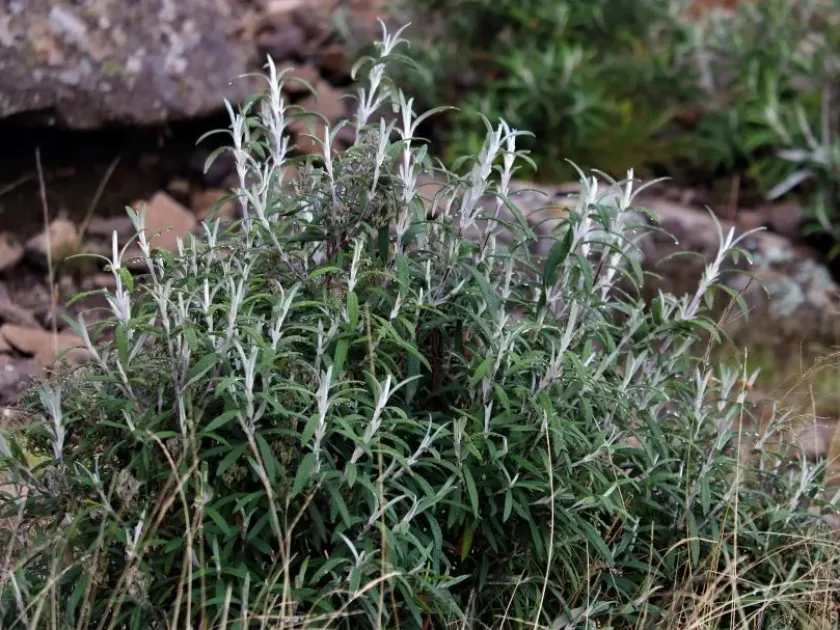
Buddleja loricata is a distinct species of flowering shrub belonging to the Scrophulariaceae family. It is native to the mountainous regions of South Africa, particularly within the mountainous landscapes of Lesotho, which makes it remarkably hardy compared to many other species in the genus.
The plant is characterized by its compact habit and distinctive foliage. The leaves are leathery with a dense, white-to-cream tomentose (hairy) coating on the undersides, which is a key diagnostic feature of this botanical species.
To cultivate this shrub successfully, growers must ensure a planting site with full sun exposure. Well-drained soil is non-negotiable, as this species originates from rocky slopes where water drainage is rapid and efficient.
Regarding soil conditions, Buddleja loricata prefers a neutral to slightly acidic pH. While it is tolerant of poor, stony soils, providing organic mulch can help retain appropriate soil temperature and moisture levels during the initial growth stages.
Maintenance is relatively straightforward but essential for long-term health. Periodic pruning is recommended to prevent the plant from becoming woody and sparse, effectively encouraging a denser growth habit and more prolific flowering.
Main diseases and pests
While generally robust, the plant is susceptible to spider mites, especially in hot and arid environments. Monitoring the foliage and increasing air humidity or applying systemic acaricides can mitigate these pest infestations.
Root rot is the primary physiological threat caused by poor soil drainage. Ensuring that the crown of the root system does not remain constantly wet is crucial for preventing infection by soil-borne pathogens like Phytophthora.