
Curly butterfly bush
Buddleja crispa Benth.
Description
Growing requirements
The curly butterfly bush (Buddleja crispa) is a distinctive deciduous or semi-evergreen shrub within the Scrophulariaceae family. Originating from the rugged terrains of Afghanistan, the Himalayas, and Western China, this species is well-adapted to rocky slopes and high-altitude environments.
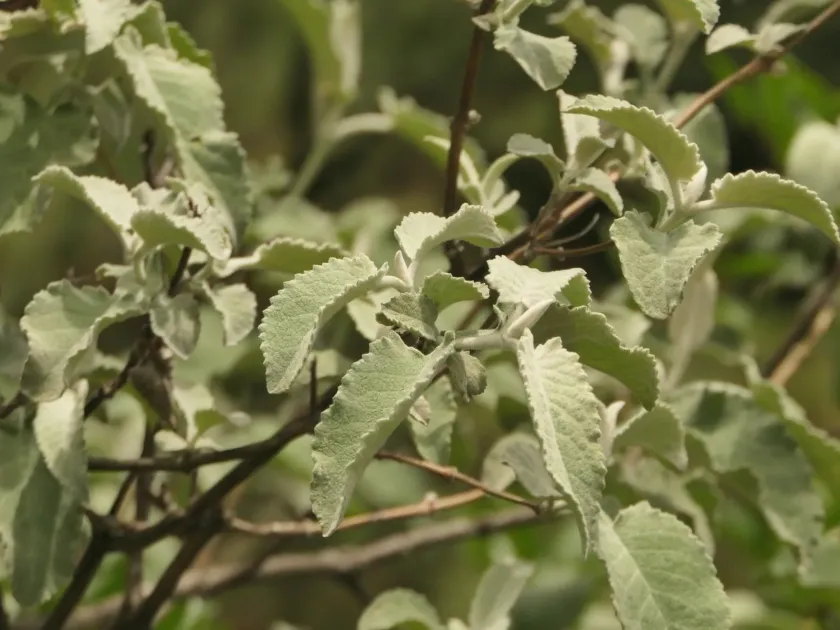
Botanically, this shrub is recognized by its unique, woolly, crinkled foliage that displays a soft silver-grey appearance. During the blooming season, the bush produces fragrant, panicle-shaped inflorescences featuring small lilac-violet flowers with bright orange throats, which serve as a magnet for pollinators.
Regarding climate requirements, Buddleja crispa thrives in full sun and requires protection from harsh, drying winds. While it shows good resistance to heat and drought, its frost hardiness is limited; in cooler climates, it is essential to provide thick mulch for root protection during winter months.
Soil conditions are critical for the health of this plant, as it demands excellent drainage. The ideal substrate is a light, well-draining, and slightly alkaline soil mix. Heavy or waterlogged soils are detrimental to the root system, often leading to rapid decline, which necessitates the addition of inorganic amendments like gravel or coarse sand.
Cultivation practices focus primarily on pruning to maintain plant vigor. Cutting back old wood in early spring encourages strong new growth, which is necessary for abundant flowering on the current year's shoots. This process not only keeps the plant tidy but also enhances the overall density of the shrub.
Main diseases and pests
Common pests affecting Buddleja crispa include spider mites and whiteflies, especially during hot, dry spells. Effective management involves monitoring foliage regularly and applying insecticidal soaps or specific miticides if populations exceed aesthetic thresholds.
Pathological issues are typically restricted to root and crown rots caused by excessive moisture. Ensuring that the planting site has superior drainage and avoiding standing water around the base are the most effective preventive measures against fungal infections and physiological stress.