
Winged-stem passion flower
Passiflora alata Dryander
Description
Growing requirements
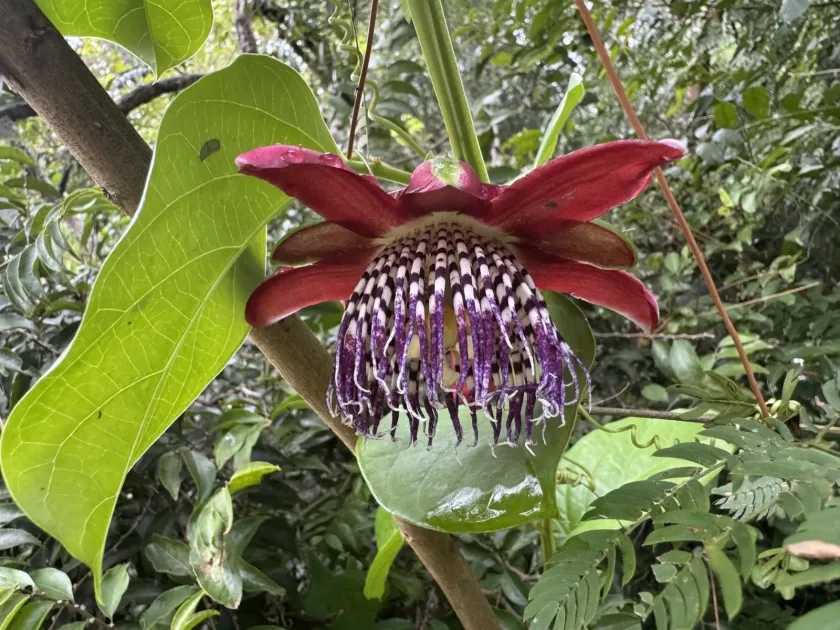
Passiflora alata, commonly known as the winged-stem passion flower, is a vigorous evergreen vine belonging to the Passifloraceae family. Native to the tropical regions of Brazil, it thrives in warm, humid environments where growth cycles are sustained by stable temperatures.
The crop requires bright, indirect light for optimal development. Exposure to intense direct sunlight should be managed to prevent leaf scorch, while ambient temperatures should be consistently maintained between 20°C and 28°C to ensure steady vegetative growth and flower production.
Cultivation success depends on well-draining, nutrient-rich soil with a neutral to slightly acidic pH. Proper irrigation is crucial, as the plant needs constant soil moisture but will suffer from root rot if the substrate becomes waterlogged or lacks sufficient aeration.
Botanically, the species is distinguished by its winged stems, large glossy leaves, and elaborate, fragrant flowers. As a climbing vine, it requires sturdy trellises or supports to manage its heavy growth habit and facilitate effective canopy management during the season.
Economically, Passiflora alata is valued for its edible, aromatic fruits, which are processed for juices, jams, and fresh culinary applications. The crop is gaining popularity in tropical agriculture due to its yield potential and the nutritional profile of its fruit.
Main diseases and pests
Common pests affecting this crop include spider mites, mealybugs, and scale insects. These pests thrive in dry environments and can severely stunt plant growth if not managed through regular inspection and appropriate intervention.
Root rot, primarily caused by fungal pathogens in wet, poorly drained soil, is a frequent threat. Effective management involves using porous growing media and strict adherence to moisture control schedules to maintain root health.
Powdery mildew can infect the foliage under conditions of high humidity and poor air circulation. Implementing proper plant spacing and ensuring adequate airflow are essential preventative measures to minimize the risk of fungal spread.
Aphids are frequent visitors that target tender shoots and flower buds. They are significant as vectors for viral diseases; therefore, maintaining vigorous, well-fertilized plants and using integrated pest management strategies is vital for long-term health.
Maintaining high hygiene standards in the field, including the sterilization of pruning tools, is necessary to prevent the mechanical transmission of viruses that can compromise the viability of the entire plantation.