
Whitebeam
Sorbus aria (L.) Crantz
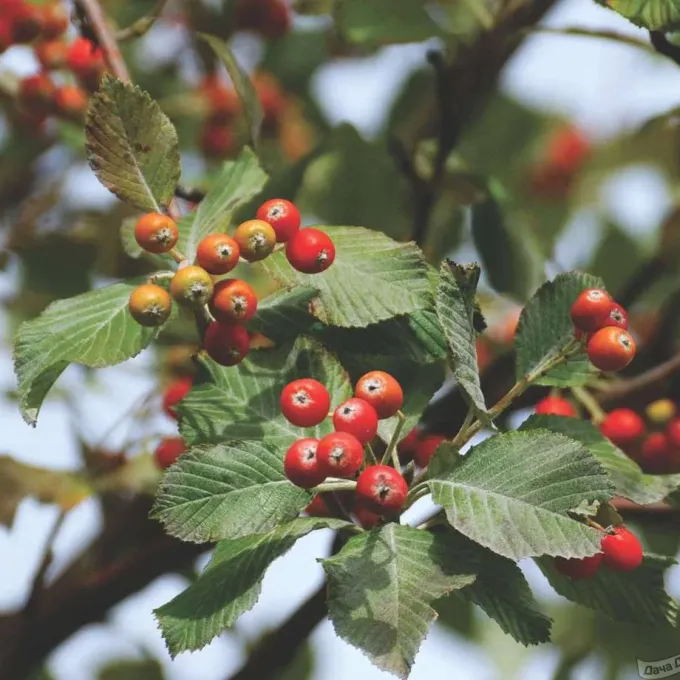
Description
Sowing dates
Sowing whitebeam seeds is best performed in the autumn immediately after harvest to allow for natural stratification in the soil during the winter months.
For spring sowing, seeds require a cold stratification process at temperatures between 0 and 5 degrees Celsius for a period of three to four months.
The seeds should be sown at a depth of one to two centimeters in a light, well-draining potting medium to ensure uniform germination of the seedlings.
Vegetative propagation is commonly achieved through budding or grafting onto common rowan rootstocks to maintain the desired characteristics of the variety.
Seedlings should be pricked out during their second year and transplanted into nursery rows to develop a strong root system before final planting.
Growing requirements
Whitebeam is a deciduous tree belonging to the Rosaceae family, native to various regions across Central and Southern Europe.
The species is highly valued for its drought tolerance and its ability to thrive in alkaline or limestone-rich soils where other species might struggle.
It prefers sunny locations, although it is adaptable and can tolerate partial shade while maintaining its characteristic ornamental appearance.
Proper soil drainage is essential for the health of the tree, as it does not tolerate waterlogged conditions that can cause root rot.
With its high degree of winter hardiness, the whitebeam is an excellent choice for urban landscaping and parks in temperate climate zones.
Yield
The primary use of the whitebeam is ornamental, owing to its dense, rounded canopy and the distinct silvery-white underside of its leaves.
The fruits are edible and feature a mealy, sweet flavor, making them suitable for use in jams, jellies, or as a wild food ingredient.
The wood of the whitebeam is dense and durable, occasionally being used in specialized woodworking, tool handles, and small artisan projects.
As a resilient tree, it is frequently planted in cities due to its ability to withstand pollution and compacted urban soils effectively.
While not traditionally grown as a major commercial fruit crop, the berries serve as a valuable food source for local bird populations in gardens.
Main diseases and pests
Whitebeam is generally robust, but it can be susceptible to powdery mildew, particularly in environments with poor air circulation or high humidity.
Common pests include leaf-eating insects, such as caterpillars and various aphids, which can damage the foliage if populations become excessive.
Sanitation practices, including the removal of fallen leaves and regular pruning, are vital for reducing the risk of fungal disease outbreaks.
If chemical intervention is necessary for pest control, systemic insecticides should be applied carefully to avoid harming beneficial pollinators.
Maintaining a balanced ecosystem within the garden by encouraging natural predators helps in managing pest populations without excessive chemical use.
Harvesting
The fruit should be harvested only when fully ripe, indicated by an orange-red coloration and a soft, yielding texture when gently pressed.
Harvesting is best carried out in dry conditions to minimize the risk of moisture-related spoilage during storage or transportation of the berries.
Bunches should be carefully snipped from the branches, ensuring that terminal buds intended for the next season's growth remain undamaged.
Once collected, the fruits should be spread in a cool, ventilated area to dry slightly and prevent the development of mold or fermentation.
For long-term preservation, the fruits can be dehydrated, which allows them to retain their culinary utility for baking and other food preparations.