
Hubei rowan
Sorbus hupehensis C.K. Schneid
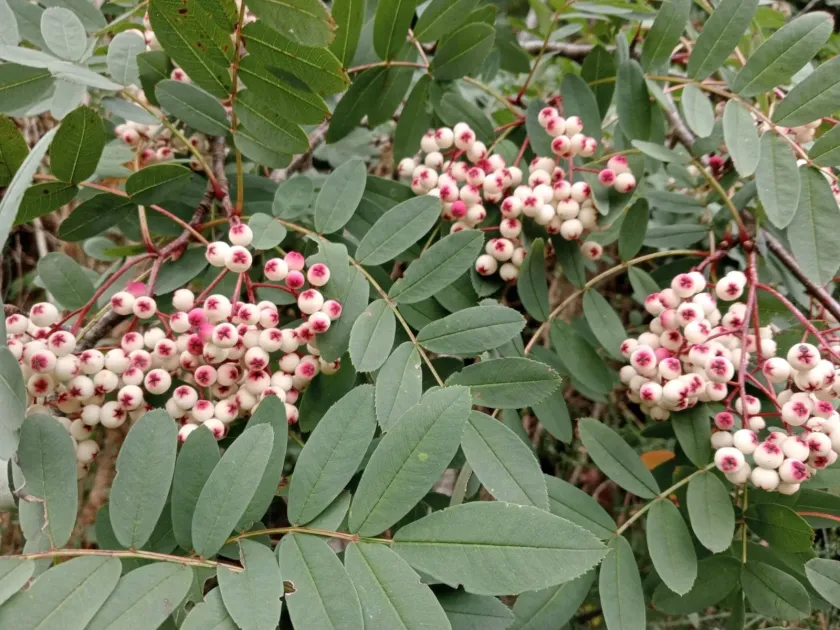
Description
Growing requirements
Hubei rowan (Sorbus hupehensis) is a species of deciduous tree belonging to the Rosaceae family. It is widely recognized for its elegant, pinnate leaves and clusters of berries that change color as they ripen.
Originating from the Hubei province in China, this species has been successfully introduced to many temperate regions globally. It is primarily valued as an ornamental tree in landscaping due to its structural beauty and seasonal color changes.
The tree thrives in full sun or light shade and prefers deep, fertile, and well-drained soils. While it is tolerant of various soil types, it performs best in slightly acidic to neutral environments that retain consistent moisture.
Maintenance involves providing adequate water during dry spells and ensuring the soil around the base is mulched to suppress weeds. Proper site selection is crucial to ensure the tree has enough space to develop its naturally spreading canopy.
Regular pruning is not strictly necessary but is recommended to maintain shape and remove any deadwood. Applying a balanced fertilizer in the early spring can encourage more vigorous growth and healthier foliage development.
Main diseases and pests
Common diseases affecting this species include fire blight and rust. These issues are often exacerbated by humid weather conditions; therefore, maintaining good airflow through the canopy is a key preventive measure.
Pest pressures primarily include aphids, mites, and scale insects. Regular monitoring of the foliage and stems allows for early intervention using horticultural soaps or appropriate insecticides to manage these common garden pests.