
Pohuashan Mountain Ash
Sorbus aucuparia L. subsp. pohuashanensis (Hance) McAll.
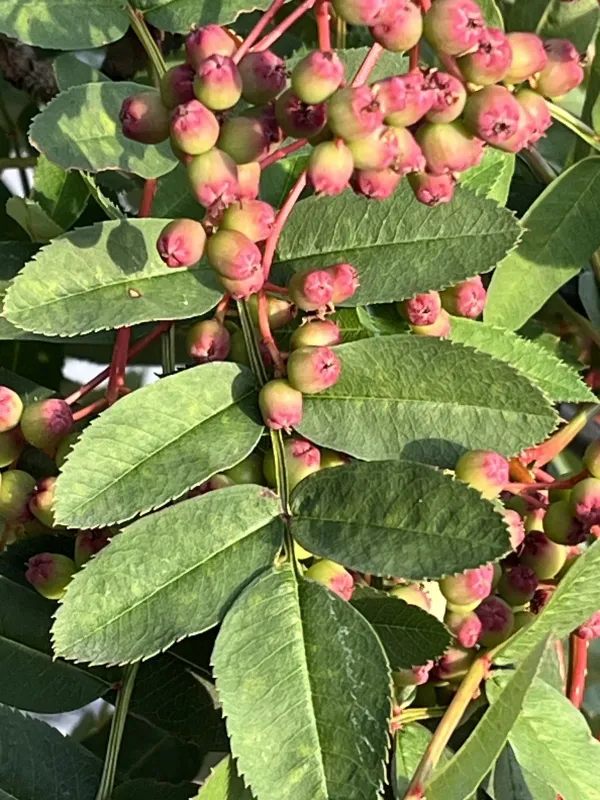
Description
Sowing dates
Pohuashan Mountain Ash (Sorbus aucuparia subsp. pohuashanensis) belongs to the Rosaceae family. Propagation is primarily achieved through seeds, which require stratification for 3–4 months at low positive temperatures to enhance germination rates.
Sowing seeds directly into the ground is recommended before winter, which provides natural stratification under soil conditions. Spring sowing is only possible if the seed material has been pre-treated in cold storage conditions.
For vegetative propagation, grafting onto common rowan (Sorbus aucuparia) rootstock is a standard practice. This method preserves the specific characteristics of the variety and accelerates the plant's entry into the fruiting phase.
Seedlings should be planted in their permanent location in early spring before sap flow begins or in the autumn, at least a month before the onset of persistent frosts. Proper timing is crucial for the establishment of a robust root system.
A spacing of at least 3–4 meters between trees is required, considering the potential canopy spread. Planting too densely can negatively affect sunlight exposure and air circulation, increasing the risk of diseases.
Growing requirements
This subspecies is native to the mountainous regions of Eastern Asia, including the northern provinces of China. The plant shows high adaptability to harsh climatic conditions and significant temperature fluctuations.
Pohuashan Mountain Ash prefers well-drained, fertile loam or sandy loam soils with a neutral or slightly acidic pH. Waterlogging in the root zone is detrimental, as it frequently leads to root rot diseases.
The plant is light-loving; therefore, open and sunny locations are necessary for optimal development and vibrant coloration of the fruits. In shaded areas, both its decorative value and fruit yield decrease significantly.
Agricultural management includes regular loosening of the soil around the base of the trunk and weed control. Young trees require moderate watering, especially during dry periods throughout the summer season.
This culture is characterized by superior cold hardiness, making it suitable for regions with temperate or cold climates. Fertilization should be moderate, utilizing nitrogenous fertilizers in spring and potassium-phosphorus blends in the autumn.
Yield
The economic value of Pohuashan Mountain Ash is primarily rooted in its aesthetic and ornamental qualities. The tree is prized for its large, umbrella-shaped inflorescences and an abundance of bright, long-lasting fruits.
The fruits of this species are edible, although they have a specific astringent taste due to a high concentration of tannins. They are widely used in landscaping to create hedgerows and formal avenue plantings.
Yield depends on the age of the tree and growing conditions. Mature specimens produce an abundant crop that attracts birds, which aids in natural seed dispersal throughout the ecosystem.
The fruits serve as a valuable vitamin source, containing significant amounts of ascorbic acid and carotenoids. They are frequently used in the food industry to produce jams, preserves, and traditional liqueurs.
While the wood is durable and fine-grained, it is rarely used commercially due to limited production volumes, maintaining primarily an applied and ornamental importance.
Main diseases and pests
Typical diseases for this culture include fungal infections such as scab and powdery mildew. During periods of high humidity, the development of leaf rust may also occur.
Among pests, the rowan moth, aphids, and various species of fruit worms that damage the berries pose the greatest threat. Preventive treatments with fungicides and insecticides should be performed before the flowering stage.
Bacterial infections, such as fire blight, can become a serious threat if sanitation standards are not followed. Infected branches must be removed and destroyed immediately to prevent spread.
Protecting the bark from rodents during the winter season requires the installation of protective mesh around the trunks. Mechanical damage often serves as an entry point for secondary infections.
Annual sanitary pruning is highly recommended to maintain the tree's health, focusing on the removal of diseased, damaged, or overcrowded branches that restrict airflow.
Harvesting
The harvest should be conducted during the phase of full biological maturity when the berries acquire a saturated orange-red color. This typically occurs in late September or October.
For manual harvesting, garden pruners are used to carefully cut the berry clusters. It is important not to damage the fruit buds forming for the following season near the cutting site.
After collection, the fruits should be sorted, removing any damaged specimens. For long-term storage, the berries should be dried in a well-ventilated room at moderate temperatures.
Harvested crops can be stored in a cool place or preserved via freezing. Freezing helps partially break down tannins, resulting in a milder and more palatable flavor profile.
Fruits left on the branches until after the first frosts become sweeter due to the enzymatic breakdown of complex carbohydrates into simple sugars.