
Broad-leaved whitebeam
Sorbus latifolia (Lam.) Pers.
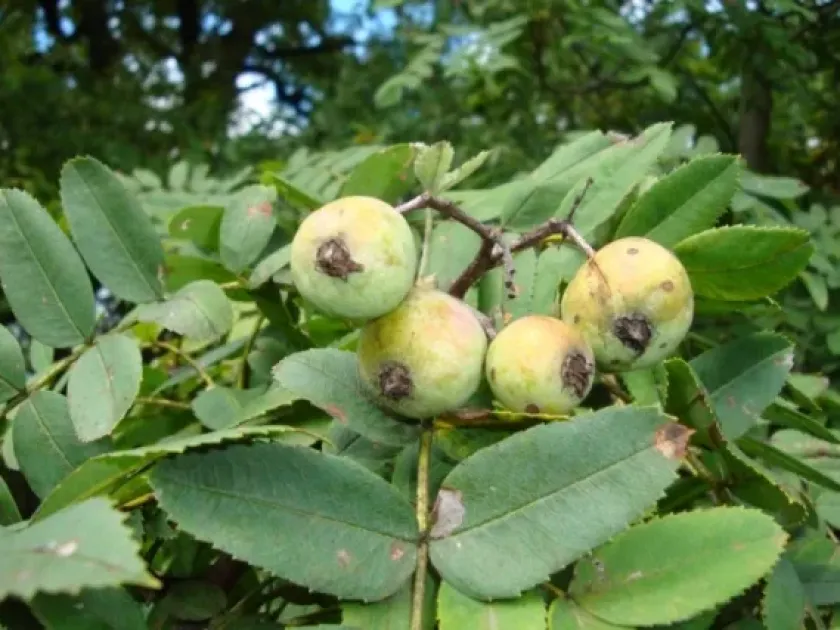
Description
Growing requirements
The broad-leaved whitebeam (Sorbus latifolia) is a deciduous tree species within the Rosaceae family. It originated as a natural hybrid between Sorbus torminalis and Sorbus aria, and it is native to regions across Western and Central Europe.
This tree is highly valued for its striking, broad, oval-shaped leaves and its wide, rounded crown, which provides excellent shade. Its architectural form makes it a popular choice for urban planting schemes, city streets, and spacious public parks where aesthetics are a priority.
Regarding cultivation requirements, Sorbus latifolia prefers well-drained, lime-rich soils. It demonstrates moderate tolerance to various soil types, but it performs best when planted in fertile, loamy substrates that maintain moisture without becoming waterlogged.
Climatically, the species thrives in temperate zones. It is sufficiently hardy to withstand mild winters, although it benefits from a sheltered position during its early years of growth. Regular sunlight is essential to promote the development of its characteristic foliage color.
The economic and practical utility of this culture is twofold: it serves as both an ornamental asset for landscaping and a source of edible fruit. The berries, though small, are nutritious and historically harvested for culinary preparations such as jams and fermented beverages.
Main diseases and pests
Common issues include susceptibility to powdery mildew, which often manifests when the tree is planted in stagnant air conditions. Proper spacing during planting is vital to ensure airflow and reduce the humidity levels that favor fungal spore germination.
Pests such as aphids and leaf-mining insects can pose a challenge during the early stages of the growing season. Maintaining the overall vigor of the tree through balanced fertilization is the most effective way to help the plant resist these minor infestations naturally.
For larger plantations, monitoring for fire blight is recommended, as this is a known risk for many members of the Rosaceae family. Infected branches should be pruned back to healthy wood and removed entirely from the site to prevent further spread.
Younger specimens require protection from mammalian browsers, such as deer or rodents, which may feed on the bark during winter. Using wire guards or protective wraps provides a simple and effective physical barrier against such damage.
Regular maintenance, including the removal of deadwood and the monitoring of foliage health, ensures the long-term vitality of the broad-leaved whitebeam. Proactive care significantly reduces the need for heavy chemical treatments in established gardens.